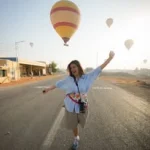
If you’ve landed on this article, chances are you’re thinking about visiting Guatemala soon — and all I want to say is… please, do it!
Guatemala carried a lot of weight for me — my expectations were sky-high. Active volcanoes, colonial cities, raw nature, and a vibrant culture. But honestly? It exceeded every single one of them.
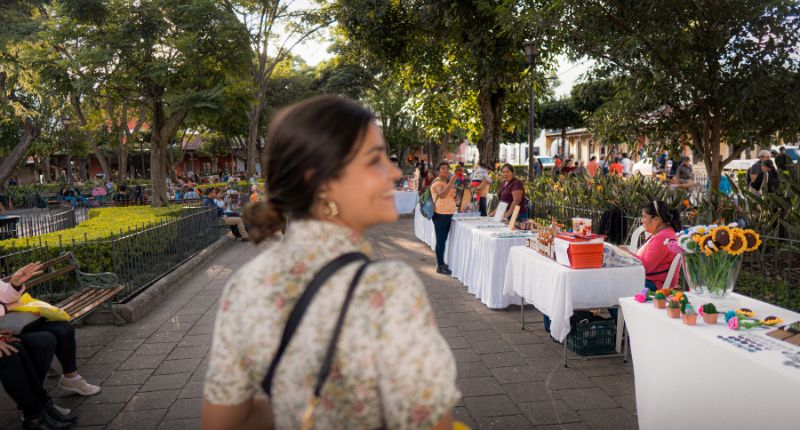
Important Info:
- How many days do I need?: At least 10 but better if 15 or 20.
- How much would it cost me?: 800 USD around for 10 days.
- Highlight of my trip: Kanba Cave (unexpected)
- Best Coffee Shop: Alegría (Angitua)
There’s a lot of experience and planning behind this — all summed up to give you everything you need to organise your trip to Guatemala independently. Prices for 2024 & 2025, money-saving tips, the best ways to get around, and practical advice.
In another words; valuable information!
Do I need visa to visit Guatemala?
Argentinian, European (Spanish, Italian, etc.), British, Colombian, Australian, and US passport holders do NOT need a visa to enter Guatemala. However, your passport must be valid for at least six months.
Countries such as the Dominican Republic, Venezuela, or the Balkans (like Serbia and Montenegro) DO require a visa, which must be obtained from a Guatemalan consulate or embassy and costs around 50 USD.
Please, check oficial websites before traveling.
Is it safe to travel around Guatemala?
Generally speaking, I’d say yes — although it really depends on where you go and the times you travel.
The city of Antigua, for example, is considered one of the safest in Central America. It’s full of police and there’s a lot of effort put into keeping tourists safe. As for the countryside, in the Semuc Champey area we felt really secure, while in Flores we felt a bit more on edge.
Of course, a lot of it comes down to common sense: don’t walk alone at night, avoid getting intoxicated while travelling solo, and steer clear of areas that aren’t recommended.
Is it safe to travel alone as woman in Guatemala?
If this is the first time you’re reading my blog, I want to share that I mostly travel solo around the world and I love writing here about my experiences — whether to inspire or warn other solo travellers, especially women. You can even follow me in real time on Instagram.
Even though I didn’t travel to Guatemala alone, I want to share my perspective.
Guatemala seems like an incredible place to travel solo. It’s safe and has a fairly well-defined route. Plus, it’s full of hostels and activities where you can meet people.
When to travel Guatemala?
Guatemala is an amazing destination all year round. It stands out for:
Dry season (November to April): Ideal weather for exploring, hiking, and even enjoying the beach. The downside is that during peak season, prices tend to rise and everything books up quickly.
Rainy season (May to October): You might get a few rainy days, but nature is at its most lush and vibrant. We travelled in the last week of October and only experienced rain on two days, for just a couple of hours. It’s true that there’s usually more mist, which can make it a bit tricky to see the volcanoes.
Also, in November the Flower Festival in Antigua takes place, and it must be absolutely spectacular.

How many days do you need to visit Guatemala?
It’s important to keep in mind that although Guatemala is a small country and distances may look short on the map, there’s a lot of traffic — meaning it can take around 9–10 hours to cover just 200–300 km. Also, most journeys take place in the morning, so you often lose full travel days getting from one place to another.
We explored Guatemala for 10 days. Micha (my partner) spent another two weeks in El Paredón, so I’ll also include his experience here.
10 days were enough to visit the places we were most interested in, although we were constantly on the move and still left things undone everywhere we went.
In other words, if you’ve only got 10 to 15 days of holiday and want to make the most of them… Guatemala is an excellent choice.
However, if you’ve got more time, 20 days would be perfect. Further down in this article, you’ll find my travel itinerary along with the adjustments I’d make after experiencing it firsthand.
How to get to Guatemala?
Guatemala City will be your first stop if you’re flying internationally. There are cheap flights from the United States, and I always check them on SkyScanner using the “whole month” option — that’s usually how I find the best deals.
If, on the other hand, you’re travelling overland, it’ll most likely be from Mexico — either via Chiapas to Lake Atitlán or Quintana Roo to Flores. Another popular route is from Belize to Río Dulce or Flores.
The tourist route in Guatemala is almost circular, so you can start your journey anywhere and plan the direction that suits you best, keeping in mind your exit point from the country.
Micha and I arrived in Guatemala City and left via the Atitlán land border to San Cristóbal de las Casas in Mexico. That’s the route I’ll detail for you shortly.
How to move around in Guatemala?
The go-to transport are the *trafics*, which everyone calls a bus, but they’re actually minivans that maximise seating capacity and tie all kinds of luggage on the roof with straps and ropes. These are usually run by private individuals or small tourism companies, depending on the area you’re in. You can book them online via *GuateGo*, but it’s generally cheaper to buy tickets once you’re on the spot.
The air option in Guatemala is quite limited due to the low *frequency of flights and minimal airport infrastructure.* Flores is the best connected, with two flights per day from Guatemala City. Prices are similar to bus fares (but don’t include luggage). I always search for them on SkyScanner.
Los famosos Chicken Bus; alegres y coloridos ex buses escolares de Estados Unidos; que cumplen la función de transporte local en Guatemala, son toda una experiencia. Y además, suelen ser los más económicos!
They’re useful for short distances; however, you *can* cross the country using them by making multiple connections. Keep in mind that some of these “transfer” points might not be very safe — I wouldn’t take the risk if you have limited time, a lot of luggage, or don’t speak a word of Spanish.
If you still want to have this experience without taking too many risks, the route from Antigua to Lake Atitlán is relatively short and usually has more tourists on board.

Important Tips:
- Payments are almost always made in cash; card payments are rare and often come with a surcharge. It’s convenient to have an *international card*, like *Revolut*, that allows you to withdraw money from any ATM, or simply carry cash (USD or EUR) and exchange it in the city centre.
- Mochila por sobre valija para llevar tu equipaje. La mayoría de lugares tienen calle de tierra, o adoquines o son super susceptibles a inundaciones. Créeme que la mochila bien puesta te salvará un montón de dolores de cabeza. Mi Osprey está viajando conmigo hace +1 año y aún no le veo defectos.
- Book accommodation in advance: the nicest hostels and hotels, offering the best prices, tend to fill up quickly. If you plan to do the hike up Acatenango volcano on a specific date, I’d also book that at least 15 days in advance. While there are many companies offering this hike, prices and services vary widely.
- On the other hand, I’d book transport and other types of tours once you’re at the destination. Check the weather and ask more than one operator. Prices are usually significantly cheaper, and almost everything can be negotiated.
- Most routes are winding. If you get motion sickness sitting at the back of a car on twisty roads, please consider taking medication beforehand. This can make a huge difference to your travel experience.
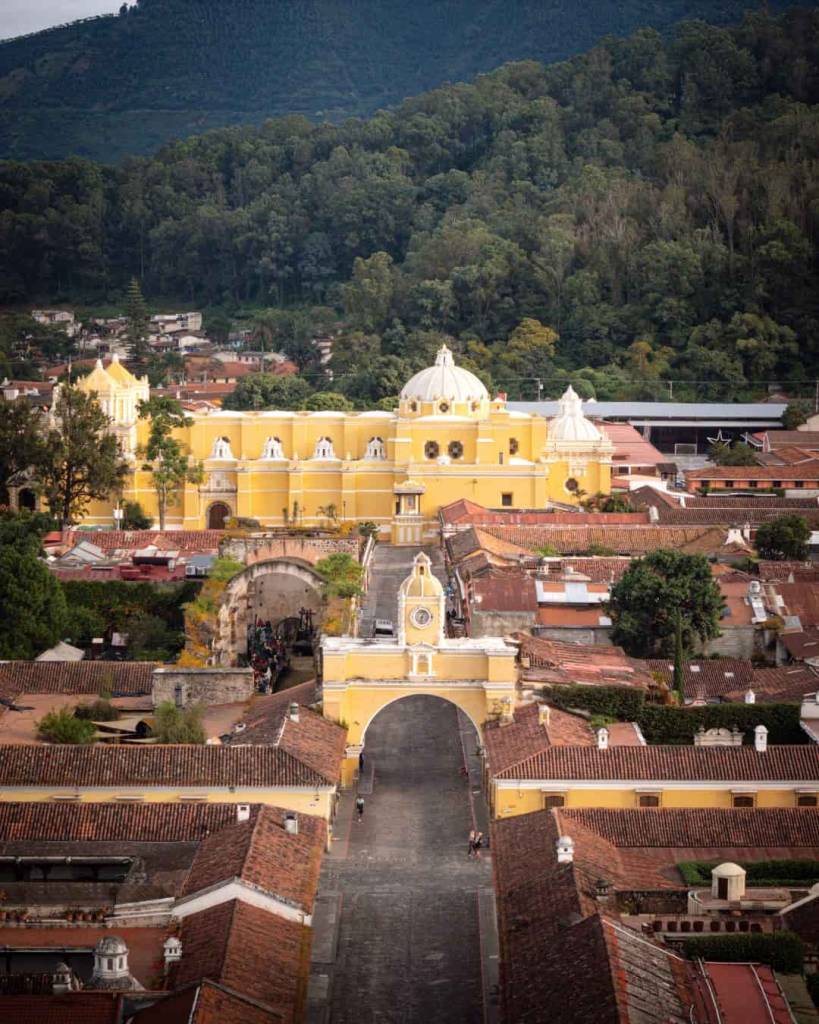
Here we go people, what you were waiting for...
Prices, tips and places for a 10 nights / 11 days itinerary in Guatemala (budget friendly)
Guatemala – Suggested Itinerary
1: Guatemala City – Flores
We arrived in Guatemala City and flew to Flores on the same day. There are two options for this route; considering prices, travel times, and schedules, flying was the most convenient for us.
Flights usually depart in the afternoon, take about 1 hour, and cost around 55 USD (without luggage), and you can find them here. Both Flores and Guatemala airports are quite small, so don’t stress about arriving too early. The price of the traffic is quite similar — maybe 5–10 USD less — but it takes 10 hours and leaves in the morning.
If you’re the type who likes to have everything booked in advance, you can check routes and prices for the trafics on GuateGo; but it’s usually much cheaper to buy tickets directly on site. By “on site,” I mean at hostels or small local travel shops.
That night we stayed in Flores, more precisely in the San Miguel area, where we got a room with river views for 40 EUR for two nights for two people; you can find it here. You can find something cheaper and perhaps better located (it’s better to book in advance because we ran out of space). This hostel is a great option.
2: Flores – Tikal – Flores

Tikal was the main focus of our visit to the Petén region. It is one of the most important sites of the Mayan civilisation, very well preserved and surrounded by nature.
In fact, we made a YouTube video about our time in Flores and Tikal (in English), and you can find it here.
If you've read me before, I'm a big believer in doing everything on my own; tours that pick you up, show you around and do everything for you aren't usually my thing. I like to organise, explore solo and share tips on how to hack the system — haha; in Tikal I came off worse.
Tours have different time availabilities, cost the same as doing it on your own, and save you the idle hours waiting between transports. The most convenient way is to buy them at your own accommodation or ask at other popular places to stay. Don’t buy from bigger companies (e.g., Civitatis); this way, the "sales commission" stays within the local tourism sector.
3: Flores – Lanquín – Semuc Champey
Full day of travel; we did the journey Flores – Lanquín in 10 hours.
All the trafics (with different operators) leave at the same time: 8 in the morning. They make a one-hour stop for lunch and other breaks for bathroom use. It’s quite uncomfortable, but it’s the only option to reach the more rustic or remote places. If you’re lucky enough to arrive first, choose the front seats, which cause less motion sickness and have more legroom.
Once in Lanquín, you have the option to stay overnight in the town itself (where most of the hostels are), or make a short trip further and enjoy a more rural accommodation, close to Semuc Champey.
We did exactly that and arrived at this eco-cabin at a very good price, right by the river. The only downside is that there are no supermarkets in that area, so you’ll have to eat at restaurants, but prices are usually reasonable. If you’re travelling solo, I also saw this hostel, which looks amazing and has plenty of great reviews.
The extra journey to the Semuc Champey area cost us 30 QTZ = 3.90 USD per person and took about 20 minutes. It’s basically a pickup truck that lets you ride standing or sitting in the back, with all your luggage. Reason number a thousand to travel to Guatemala with a backpack.
4: Semuc Champey

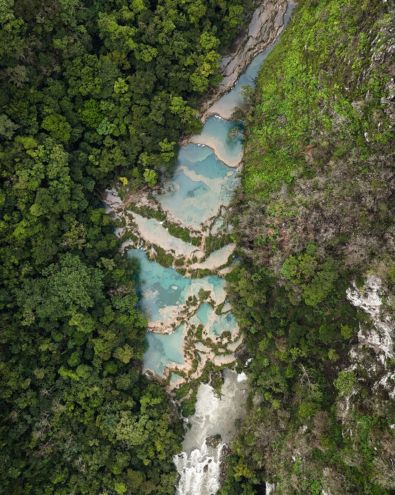
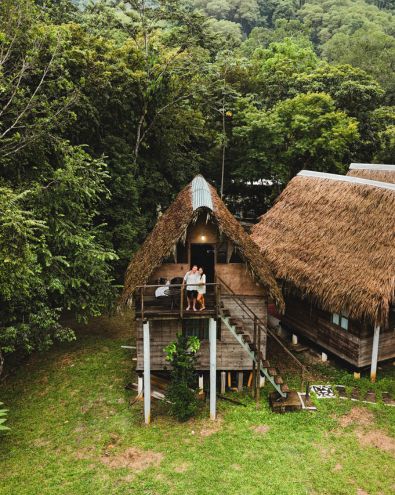
All the hustle and bustle makes sense when you see Semuc Champey from its viewpoint, or even more so when you jump into the pools. We’re putting together a YouTube video about this experience, and I’m finishing writing the article to give you all the details of this journey.
For now, all I can say is that it’s a pure and authentic contact with nature, and one of the few places where tourism hasn’t significantly altered the locals’ way of life. A true marvel.
5: Semuc Champey – Lanquín – Antigua
Another full day of travel; if you’re staying in the Semuc area, it’s best to buy transport directly from them (don’t forget to haggle a little), which also includes the journey to Lanquín.
We left at 7:30 and arrived at sunset!!! The bus passed through Guatemala City; the journey to Antigua can take between 1 to 5 HOURS, depending on traffic.
Once in Antigua, we settled into this room, also very comfortable and affordable; it had views of Volcán Agua, and the sunrise was fabulous. Antigua is the most aesthetically pleasing place I’ve been to, and it’s full of beautiful accommodations; prices there are also higher. I’ve heard, for example, that Ojalá is amazing; I had a coffee at Flore and would have loved to stay there, and Socialtel AKA Selina is simply gorgeous.
6: Antigua
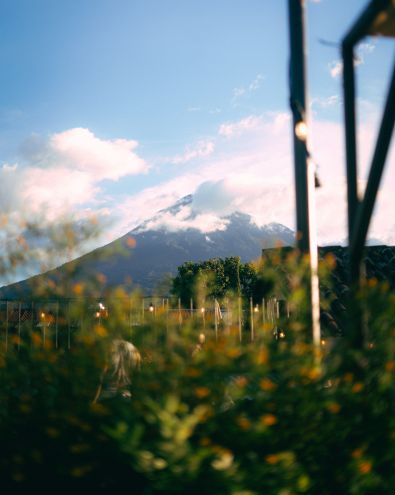
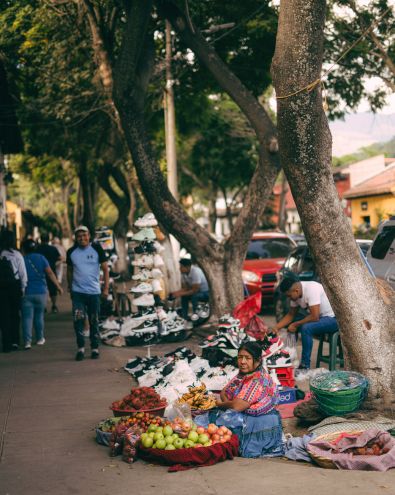
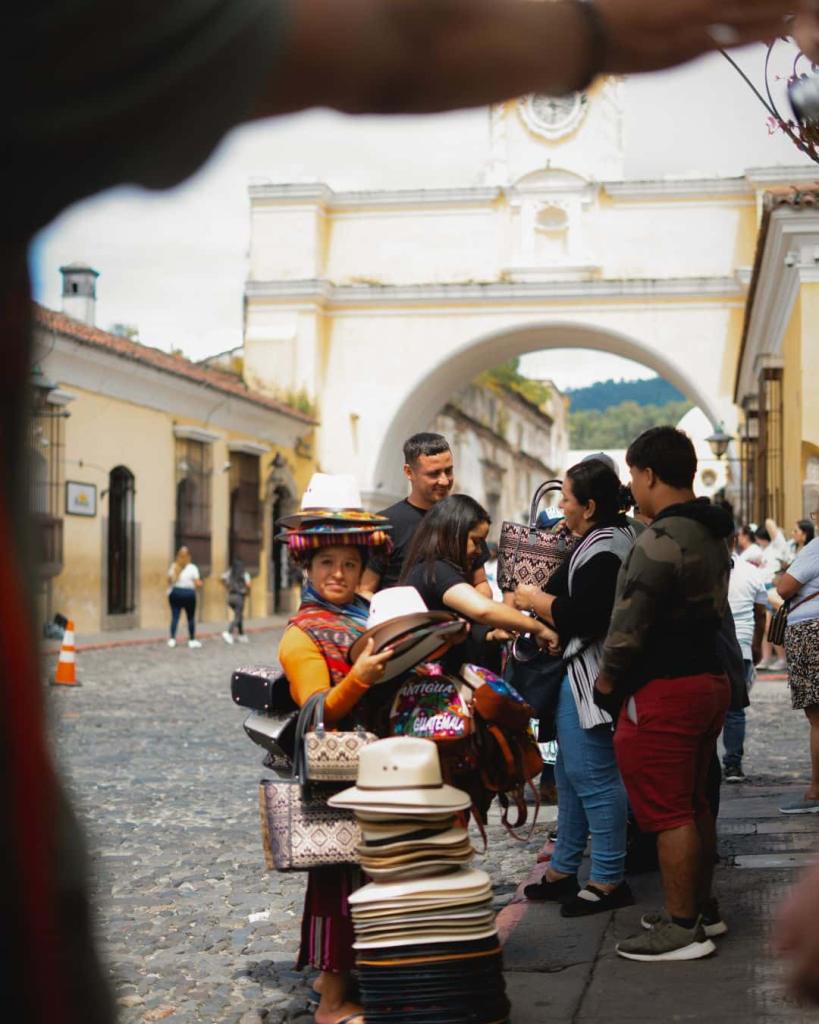
Antigua is beautiful, and this day was exclusively for exploring it.
We did a free walking tour, wandered through colonial streets, and were recommended a bunch of cafés and bars; we tried a few. We explored the handicraft market, visited the ruins of the old cathedral in the afternoon, and spent the evening getting ready for the next day. Can’t wait to go back!!
Oh, and by the way, at the beginning of this article I mentioned the café Alegría as one of the nicest; here I made a little video.
7: Antigua – Volcán Acatenango
The alarm went off at 5 am so we could meet our group at a nearby church and head to San Jose Calderas, the starting point for visiting the famous Acatenango. This volcano is climbed via a fairly intense hike to see the neighbouring volcano (Fuego) erupt.
I have so much to say about this experience that I wrote a separate article, which you can read here.
We chose to do it with V-Hike because of the trust we felt in the team and its owner. On the seventh night of our trip to Guatemala, we spent it at 3600m in a trench with huge windows overlooking the mist and, from time to time, the much-awaited Fuego and its smoke.
8: Acatenango – Antigua

The bravest woke up to the guides’ claps at 3 am despite the mist, fatigue, and cold, to climb to the summit of Acatenango and see Fuego’s eruption more clearly. At that moment, everything was a mystery because it was so cloudy you couldn’t tell which way anything was.
I still don’t know if it was laziness, altitude sickness, or fatigue, but my day started at 6 am, with interviews and coffee for everyone who had climbed. And who were lucky enough to see it for a couple of minutes!!
After breakfast, we faced 4 hours of descent and two rides in a minivan to return to Antigua. Our plan was to head straight to Lake Atitlán, but we had a few issues with the laundry in Antigua and had to go back to pick it up. I remember that day, number 8, was a Sunday, and all I needed was a plate of something warm and a shower.
Casa Quatzalli, booked at the last minute, felt perfect.
9: Antigua – San Pedro La Laguna
Finally, the day for Lake Atitlán. This little mix-up with our laundry cost us a day of visiting the lake. The itinerary consisted of a 3-hour bus ride to Panajachel (the largest and most visited town on the lake) and a boat ride of at least 1 hour to reach San Pedro (the party paradise, so they say).
But when you’re eager to get somewhere, everything goes wrong, and the bus broke down halfway. We waited 2 hours for a replacement and ended up finishing the journey in another “rescue” traffic. The 3-hour trip turned into 6, leaving us less than 5 minutes to catch the last boat of the day.
Choosing San Pedro as our base wasn’t an easy task. Apparently, all the little towns around the lake have their own personality, and we would have loved to visit them all. Considering our next destination and the connectivity we needed, we ended up preferring it.
We chose to stay at Gran Colibrí, with a lot of doubts because it was full of free amenities (like free tuk-tuk or kayak), but thankfully we booked because it exceeded all our expectations! It was the most affordable accommodation of our entire trip to Guatemala.
10: San Pedro La Laguna – Lago Atitlán

There was so much to see in just one day, so I chose to explore the lake itself. And so, I dived in!
Diving deep in freshwater and in one of the highest-altitude lakes in the world? An experience in itself. The first dive was at 9 in the morning, so I arrived bright and early at Isla Perdida (a beautiful hostel), which was about an hour away by boat.
We spent the rest of the day kayaking and visiting panoramic spots in San Pedro. There were so many things left to see at Lake Atitlán, which will definitely be the reason to return in the future.
11- The Goodbye: San Pedro La Laguna – San Cristobal de las Casas (México)
Our 10-day itinerary ends here, with the farewell of a stunning sunrise seen from the last bus leaving the lake.
The border crossing between Lake Atitlán and Chiapas is an experience in itself, and there’s a lot of information about it. I’m currently working on another article to share my experience in detail. But if you have any questions RIGHT NOW, feel free to message me via email or Instagram.
Now that you know everything we did, I want to share a few tips on what to add if you have more time — or what I’d change in this plan after having experienced it myself.
Things I would change!
Honestly, I’d follow a very similar plan. I’d just make sure that on day 8, you manage to reach Lake Atitlán so you can explore it for at least one more day.
It’s also true that there are as many travel styles as there are destinations in the world, and you should be honest enough with yourself to know whether these places are truly the kind that interest you.
For example, if you’ve been visiting Mayan monuments all along and don’t feel too excited about travelling just to see another archaeological site, that’s totally valid. In that case, I’d give you three alternatives:
1 - Save a bit more on transport and add 2 extra days to enjoy Lake Atitlán.
2 - If you felt Guatemala was missing a beach vibe, dedicate those days to El Paredón.
3 - If culture and crafts are your thing, there are plenty of little towns you can visit on a day trip from Antigua — or you could even spend those days in Quetzaltenango.
20 days Itinerary for Guatemala:
1: Guatemala City – Río Dulce
2: Río Dulce
The Guatemalan Caribbean, where the river meets the sea, surrounded by jungle. From there, you can reach Livingston, a coastal town accessible only by boat.
Día 3: Río Dulce – Flores
4: Flores – Tikal
5: Flores – Lanquín – Semuc Champey
6: Semuc Champey
7: Semuc Champey – región
We were enchanted by this region in the department of Alta Verapaz. We discovered that there are other areas much further from tourism that we would love to visit, such as Sachichaj, Parque Nacional Grutas de Lanquín, and Eco Centro Yaliha.
Día 8: Semuc Champey – Antigua
9: Antigua
10: Antigua – Acatenango
11: Acatenango – Antigua
Día 12: Antigua
Although Antigua is quite small, it’s full of museums and little spots to explore. If you’re willing to move a bit further, you can take a chicken bus to towns like Santiago Sacatepéquez (for its famous market) or San Pedro Las Huertas.
13: Antigua – El Paredón
Día 14: El Paredón
El Paradón is a relaxed paradise where time takes on a different meaning. If I had to choose three words to describe it (according to Micha’s experiences), they would be sunsets, waves, and turtles. Here, you can participate in releasing turtles into the sea (and learn about it) for free.


El Paradón is a relaxed paradise where time takes on a different meaning. If I had to choose three words to describe it (according to Micha’s experiences), they would be sunsets, waves, and turtles. Here, you can participate in releasing turtles into the sea (and learn about it) for free.
15: El Paredón
Día 16: El Paredón – Lago Atitlán (San Pedro)
El Paradón is a relaxed paradise where time takes on a different meaning. If I had to choose three words to describe it (according to Micha’s experiences), they would be sunsets, waves, and turtles. Here, you can participate in releasing turtles into the sea (and learn about it) for free.
17: Lago Atitlán (San Pedro)
18: Lago Atitlán (San Marcos)
San Marcos is the hippie town of the lake, where there are countless options for vegan food and yoga. Lots of art and a relaxed atmosphere. I’d take advantage of its proximity to visit the Casa del Mundo and the nearby little towns.
19: Lago Atitlán (San Marcos)
Día 20: Lake Atitlán – Guatemala City to fly home or take a bus to Mexico to continue the adventure.
This would be a super complete itinerary that would let you experience every corner and see the differences of Guatemala. You might also consider taking a day from Antigua to dedicate it to Quetzaltenango, famous for its markets and vibrant culture.
I hope this article has helped you visualise and better organise your trip to Guatemala. Also, to share that in August 2024, I started my long-awaited backpacking trip through many Latin American countries, leaving from home (Argentina) all the way to Mexico. Pause for a second — I skipped many places. But you can start reading Bolivia, for example, if you’re interested; I keep updating the website all the time.
Now, I’m travelling through Europe, taking my time and stopping everywhere on my way to my little home in Oceania, Australia. I invite you to follow the minute-by-minute of my experiences on Instagram and hey — have an amazing time in Guatemala!!!! I’d love to hear about your experience. Cheers!
Guadi !