I promise you that this wonder is even more special in person. Mind you: the experience largely depends on which section of the Chinese Wall you choose.
This “excursion” was part of a one week trip to the north of China, but this country challenge me a lot. Even though I have spend already almost 2 months (counting Hong Kong), please articles about China here.
Here I will tell you which are the most popular options, what is special about each one and how was my own experience touring it on foot, on my own and without crowds. Shall we start?
Where is the Great Wall of China & Best Base Cities to Visit From?
The Great Wall is more than 21,000 km long, but not all parts of it can be visited. Some sections are inaccessible, others are inside military zones and many are in very remote areas.
For this reason, the wall is organized by sections, each with its own administration, type of entrance and recommended tours. Choosing the right section is key to defining the experience.
The most common is to visit it from Beijing and combine it with other attractions in the Chinese capital. From there there are several accessible sections, and depending on which one you choose, the experience can be totally different.
Below I will tell you which are the main options and which, in my experience, I would discard.
Which Section of the Great Wall should you choose?

Badaling – the most Crowded Section
It is the section closest to Beijing, so all tours and you want to have very little time in Beijing, visit. They are all restored towers, very accessible. The entrance fee is 45 CNY (5.5 EUR).
I would really rule out visiting this area altogether.
Huanghuacheng – The Most Photogenic & Lakeside Section
Huanghuacheng is another gem and not many people know it. It is on the map between Badaling and Mutianyu; the characteristic is that it is surrounded by water and the views are spectacular. It is close to Beijing but requires more organization than Badaling. The entrance fee is 5.5 EUR.
Mutianyu – The Most Fun (Toboggan Run!)
It is an improved version of Badaling, surrounded by greenery but also comfortable and easily accessible. The most iconic thing is the slide down from the wall. The entrance fee is 40 CNY (4.85 EUR), but the slide costs another 100 CNY (12.12 EUR). Although there is a lot of propaganda about “avoid the crowds, visit Mutianyu”, it has also become quite crowded.
Jinshanling – The Adventurous Hiker’s Paradise
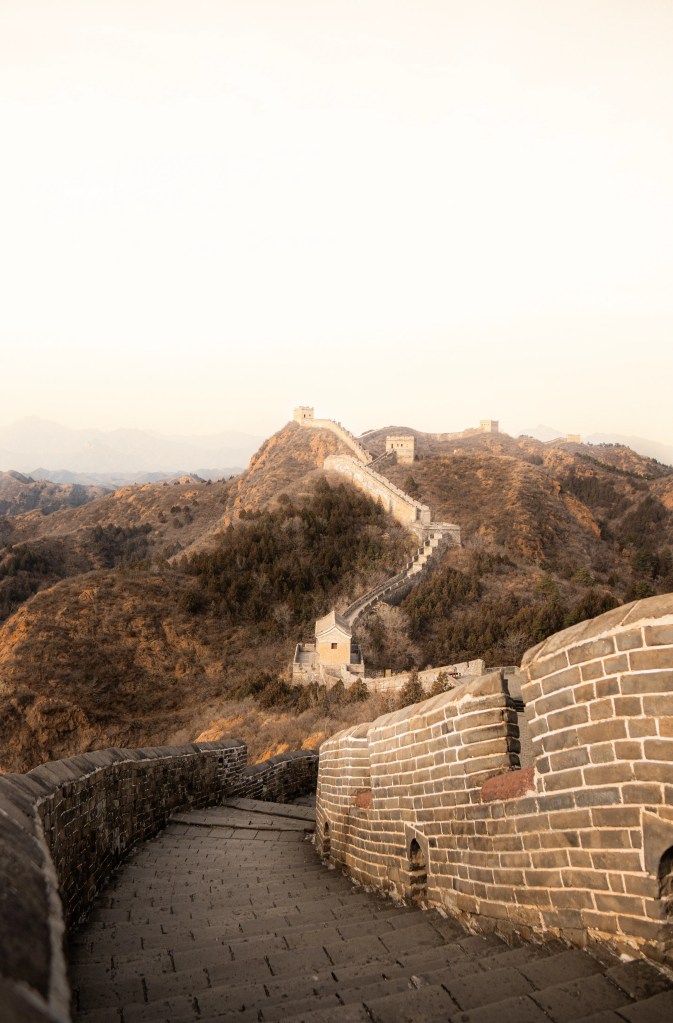
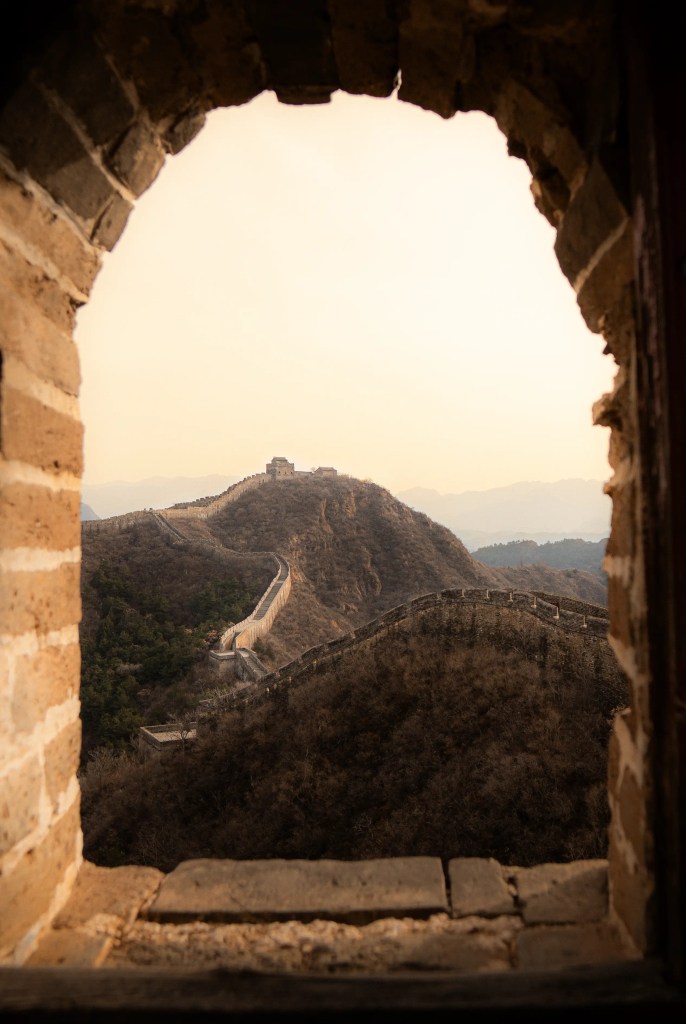
This is one of the areas I visited and loved it. It has restored and original sections, where you can really see how the wall is preserved today. The views are amazing and it has a lot of areas available to walk around and walk around. The entrance fee is 65 CNY (7.88 EUR) and they also have a shuttle supplement for another 10 CNY.
Simatai – The Magical Night Experience
It is the only part of the wall that can be visited illuminated at night. It is close to Gubei Water Town, a little further away from Beijing. I also had the opportunity to visit them and I will tell you about my experience.
The entrance fee is a bit more expensive, 40 CNY in the morning and another 80 to 100 CNY in the evening (9.70 – 12.12 EUR).
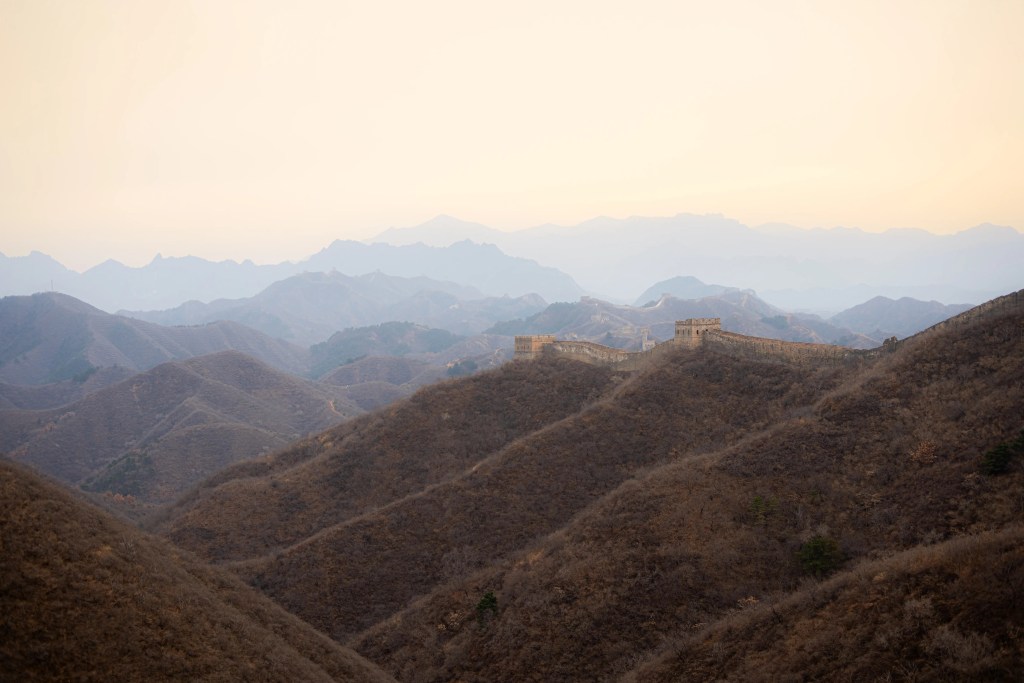
How I Visited the Great Wall Without a Tour or Crowds:
I chose two sections of the Wall close to each other, but very different in experience.
I walked it overnight in Simatai and, the next day, hiked 12 km from Jinshanling.
Below I explain each one in detail and what would be the alternative I would suggest based on what I experienced.
Simatai + Gubei Water Town
Gubei is a village that recreates the traditional architecture of northern China, located near a dam. It is built 100% for tourism, but it is so beautiful that, in my opinion, it is worth a visit.
The Simatai section of the Wall is located right next to this village. To tour the wall it is not mandatory to pay the entrance fee to Gubei, but the most common is to combine both visits… and that’s exactly what I did.
How to Get to Gubei Water Town from Beijing?
From Beijing, leaving from Dongzhimen, there are buses that for 46 CNY (about 6 EUR) leave you directly at the entrance of Gubei. There are only two departures per day: at 8 am and 1 pm.
It is important to know that this is the only transport that is paid in cash or with the Beijing Transport Card. They do not accept Alipay or WeChat, so be prepared.
🧚🏽 Google Maps does not work well in China, the best alternative is AMAP. There you can find this town as “Beijing Water Town” and the directions by public transport work perfect.
Alternatively, you will find cab drivers who offer a pool cab service for 80 CNY and will probably make the trip faster.
Where to Stay in Gubei Water Town: Best Accommodation Options
If you only want to visit Gubei town and the wall at night (or one of these two); it is not necessary to stay overnight in Gubei. There were several travelers booking a cab back to Beijing at night for about 25 EUR.
However, if you want to take advantage of the proximity to other sections of the wall, it would be the fastest and most recommended option (especially because the place is beautiful).
In China, the booking site par excellence is Trip.com and here is no exception. I chose 37 Degree Water Town Holiday Villafor about 15 EUR per night. It was really a bit complicated to find the place but, it had all the necessities covered and direct views to the wall.
⚠️ The little village on the water is closed and they charge admission PER DAY, that is, if you stay inside the walls, you have to pay 2 entrances but it is so beautiful that maybe it is worth it, this is an example of that.
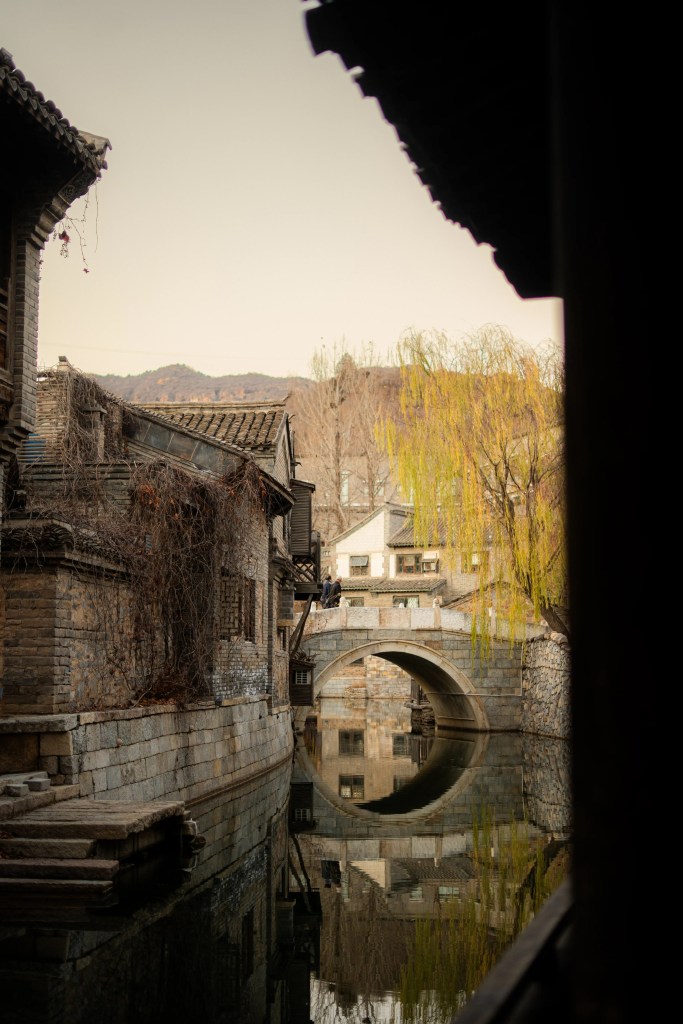

Gubei Water Town + Simatai Great Wall Tickets & Entry Fees
There are a lot of options available, combinations and it depends a lot also on the schedule. I paid around 36 EUR (a lot for China) for the combination of the wall at night, the cable car round trip and the entrance to the water village.
What is It Really Like Visiting the Great Wall of China at Night? Is It Worth It?
I went to the water town by bus. It is the last stop on the tour and the ride takes about 2.5 hours. After checking in at the hotel, I bought the combined ticket (paid with WeChat, but in person) and entered the village around 4:30 pm.
I traveled at the end of November, out of high season, and there were very few people. Even so, you can see that the place is prepared to receive large numbers of visitors.
Gubei has lots of things to do: restaurants, cafes, temples, art workshops and a lookout tower. There are maps all over town. At 6.30pm I was due to arrive at the entrance to Simatai.
The entrance fee includes shuttles that connect the town with the Wall, both there and back, although I did not use them. Once past security, you access the cable car, which can be used individually or in groups. It takes about 8 minutes to reach the mountain.
From there there are two different accesses to the Wall: one begins with stairs to the right and the other continues straight ahead, with a slight descent. I chose the latter.
During the night visit only four towers can be visited. Following the straight road, you will find an empty part of the Wall (not available for walking) ideal for photos. From there, you will go up with some vertiginous stretches, which for me, it is better to go up than down.
Simatai Night Experience: Honest Review & Crucial Tips for the Illuminated Wall
In my opinion, it is very original and special to see the Wall and the town illuminated at night, especially at the beginning, when the horizon is still reddish and the stars begin to appear.
Even so, if I could choose, I would go around 5 o’clock, when it is open, to see the sunset and then how the night falls. Combined with another section of the Wall during the day, I think the experience is spectacular and I would definitely choose it again.
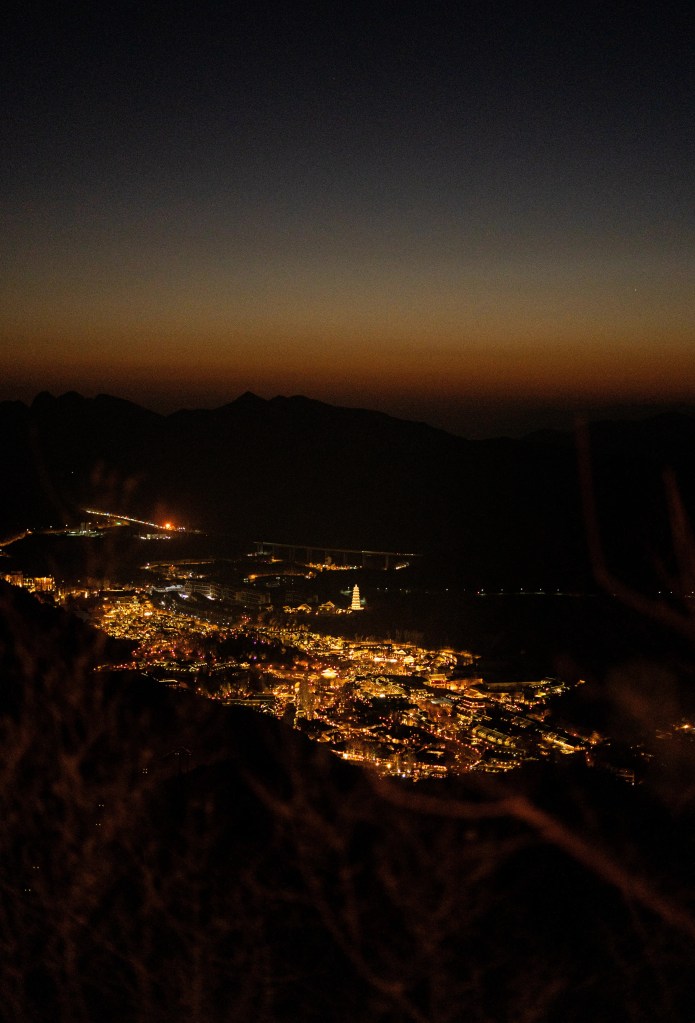
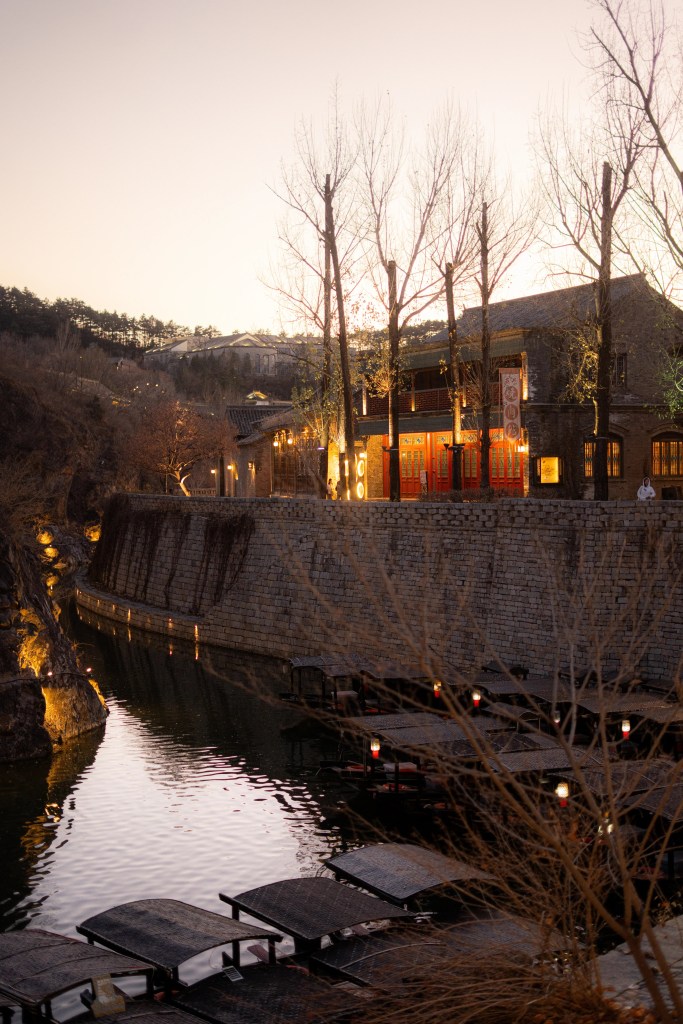

Hiking the Great Wall of China: The Jinshanling Section
Jinshanling is one of the most complete sections to visit the Wall. It combines restored sections, those that you surely already have in your head from the photos, with original areas where you can really appreciate the ancestral construction. In addition, due to its extension and location, it is one of the best areas for long walks on the Wall.
The hike goes from Jinshanling to Gubeikou and is about 12 km long, combining sections on the Wall with parts at its base. It is not very well signposted, but below I will explain the route in detail.
How to Get to Jinshanling Without a Guide?
The only way to get to Jinshanling is by cab; but wait, now I’ll tell you from where.
- If you come from Gubei Water Town or the Simatai Wall (as I did), you ask for a cab at the entrance of the village and you arrive in 20 minutes for less than 5 EUR.
- If you do not plan to combine it with another section of the Wall, a good option is to arrive the night before at Gubeikou, which does have a train station. From there, the cab to Jinshanling costs about the same. Another alternative is to do the hike in reverse: start in Gubeikou and finish in Jinshanling.
From Beijing, you can take a train to Gubeikou, that part of the wall is Unrestored. It is the cheapest option and also quite comfortable.
You can check the schedules on Trip.com, but if you have time, it is convenient to buy the ticket directly at the station using the train number. This way you will save the app’s commission, which is usually high for such low-cost trips.
Where to Stay Near the Jinshanling Great Wall
As I told you, I stayed at 37 Degree Water Town Holiday Villa in Gubei village, however, if you choose to do only this section of the wall, you should stay in Gubeikou Village.
These accommodations are close to the train station and the entrance to the city wall (a half hour walk).
Jinshanling + Gubeikou: Ticket Details
I arrived by cab at the central entrance of Jinshanling and bought the ticket on the spot, again using WeChat. It costs 65 CNY (about 8 EUR) and there is an additional 10 CNY (1.50 EUR) to use the shuttle service to the main area. There is also a cable car, but it only runs in high season.
The path to the wall is very nice and not too steep. You pass by small markets, a cafeteria and restrooms, which makes the start of the tour quite comfortable.
Jinshanling can also be accessed from the east or west side, as there are entrances in those areas. If you are traveling in low season, it is advisable to make sure they are open before you go.
As for Gubeikou, the usual thing to do would be to pay an additional entrance fee for that section. However, since I traveled in low season and there were very few people, there were no staff at the entrance and I didn’t end up paying anything.
The Ultimate Jinshanling to Gubeikou Great Wall Hike
The Jinshanling area is divided into east, central and west. The eastern part used to be connected to Simatai via a hike, but for some years now it has been closed and is no longer accessible.
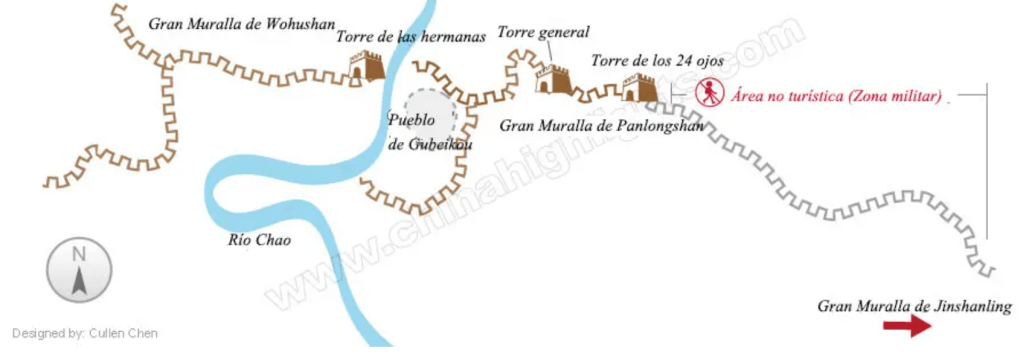
The western part, on the other hand, is somehow connected to Gubeikou and is the section that can be walked today. Between the two there is a military zone that prevents continuing along the top of the Wall. For this reason, an alternative route was designed, not very well signposted, that skirts the wall and crosses the field until it reaches the next section.
Starting the Great Wall Trail: Step by Step Route
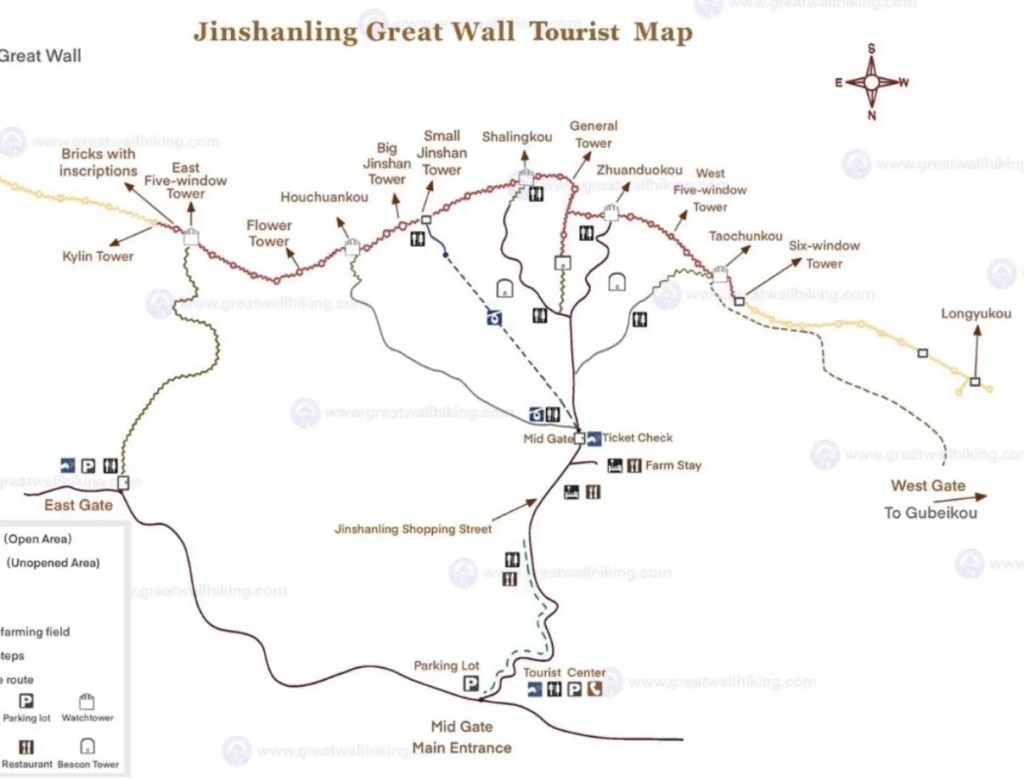
It is best to start at the main entrance. If you go up without shuttle or cable car, the first view you will have of the Wall is General Tower (see the map). From there I went up to Shanlingkou, which has incredible views, and once there I started the tour to the west.
Six Window Tower is the last tower enabled for the tour. Between Teochunkou and Six Window you will see a sign that says “scenic walk”, it is that way. During the walk, the easiest way is to follow the signs to the parking lot at the west gate.
When you get to that door, the scenic walk seems to lead nowhere. There you have to turn left, towards where you see construction, and you will find a small tunnel that takes you to the other side, passing under the Wall.
There are probably people working in Teochunkou; if you have any doubts, you can ask them right there and they will guide you.


Essential Things to Know Before Hiking the Great Wall:
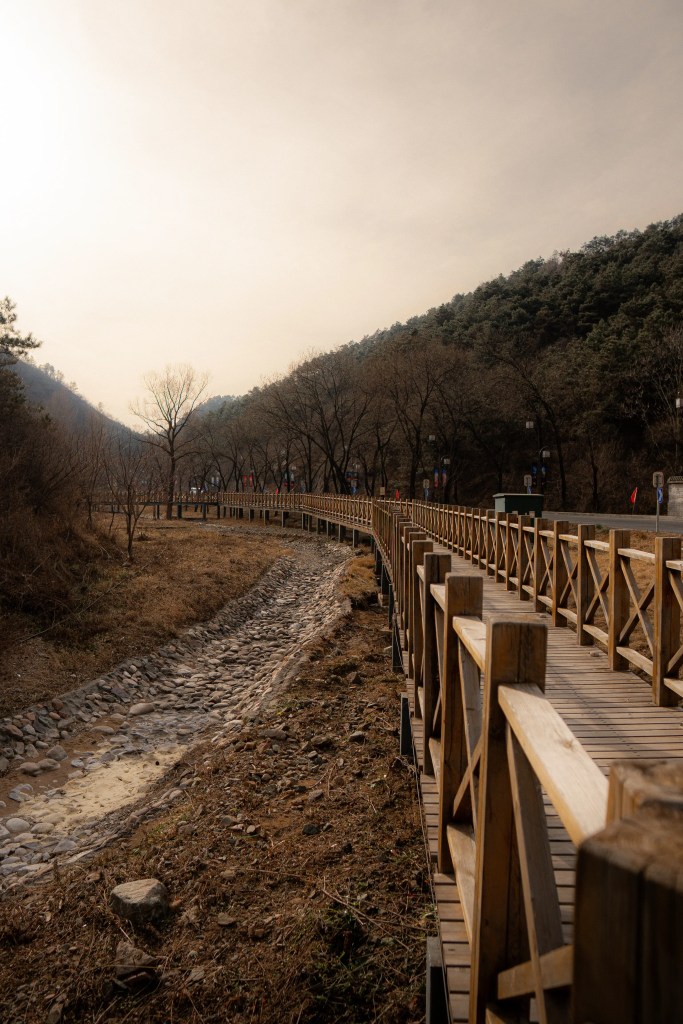
You will walk with the Wall always on your left and trees on your right. The signs you have to follow are pink dots. Every time you feel you are leaving the path, look around; you will almost certainly find one of these dots marking the route.
⚠️ If you do the hike in reverse, many hotels in Gubeikou have photos of the detours. If not, you will have to check the pink dots, which in that case would be behind you.
The hike is not difficult, but it is quite steep. There are many slopes with dirt and loose pebbles that, at least for me, were quite slippery on the way down. The first part ends at the parking lot at the west entrance of Jinshanling.
There is a little shop where you can replenish water and snacks. It is the last stop of the tour, so you should take advantage of it.
Arriving in Gubeikou Village:
Standing in the parking lot, with the little shop on the right, there is only one road to the left that leads to Gubeikou. It is important to remember this because there are no signs indicating it.
The trail to get to the Wall goes mainly through the forest. It is very nice and quite easy to walk. Once you get to Gubeikou, the original wall begins. Here you have to pay attention to the route you choose: it happened to me to walk about 500 meters above the Wall and reach closed towers, having to retrace my steps to find the right detour. Here there are no more pink dots, but section signs.
The original sections are much steeper than the restored ones. The stones are loose and, for much of the route, there are no side walls. Even so, the sensation of walking along these sections is so impressive that it is completely worth it.
Finishing the Hike & How to Get Back to Beijing
During the last part of the hike you will see some wooden stairs along the wall: this is the path you have to follow. When you reach the General Tower, it is time to start descending towards the village of Gubeikou.
The train station is about 40 minutes walk from the main entrance of that section. You can also order a DiDi for about 1 EUR and, in high season, there are usually cabs waiting right there. In November, when I went there, there were none and I couldn’t get a driver to accept the trip by app either.
I ended up walking to a supermarket, asked for help and one of the girls got me a driver. Keep in mind that the last train to Beijing leaves at 17:23 and that there is passport control and security, so it is advisable to arrive a little early.


And this is as far as the hike goes. It was an incredible experience and, without a doubt, one of the best memories I have of China.
Later I will write about my complete itinerary and other trips I have already organized in the center of the country. But before closing this article, I want to leave you some random information that I would have liked to know before going.
Expert Tips for Visiting the Great Wall of China Independently
Where to Store Your Luggage at the Great Wall?
I left my things at the accommodation in Beijing after check-out, with no extra charge. If that option is not available, within WeChat there is an alternative to use lockers in stations, shopping malls and some buildings. Of course: to use them you need to have a Chinese phone number.
The other alternative is to leave your things at your hotel in Gubeikou or Gubei Water Town, although that means taking another cab to pick them up again. Either way, what I do recommend is to make the hike as light as possible.
Where to Eat: Are there restaurants or shops on top of the Great Wall?
Keep in mind that the walk can take between 4 and 6 hours, so it is advisable to bring snacks and enough water to cover the entire route. In high season, the restaurants and bars at the entrances to the Wall are usually open (with quite high prices) and there are also some kiosks around to buy something.
I bought breads and chocolates at the Lawson in Gubei Water Town, and in Gubeikou there is a large supermarket where you can also stock up.
****************
Some of these links are affiliate links. That means that, if you buy through them, the company gives me a small commission without costing you anything extra. That way you help me to keep traveling and creating content like this.
There’s no doubt that visiting the Chinese Wall this way was epic, and I’m sure you’ll love to experience it this way too. If you have any questions, you can leave them in the comments or send me a message on Instagram at @guadiviajando.
Thank you for coming here, enjoy China!
Guadi.