
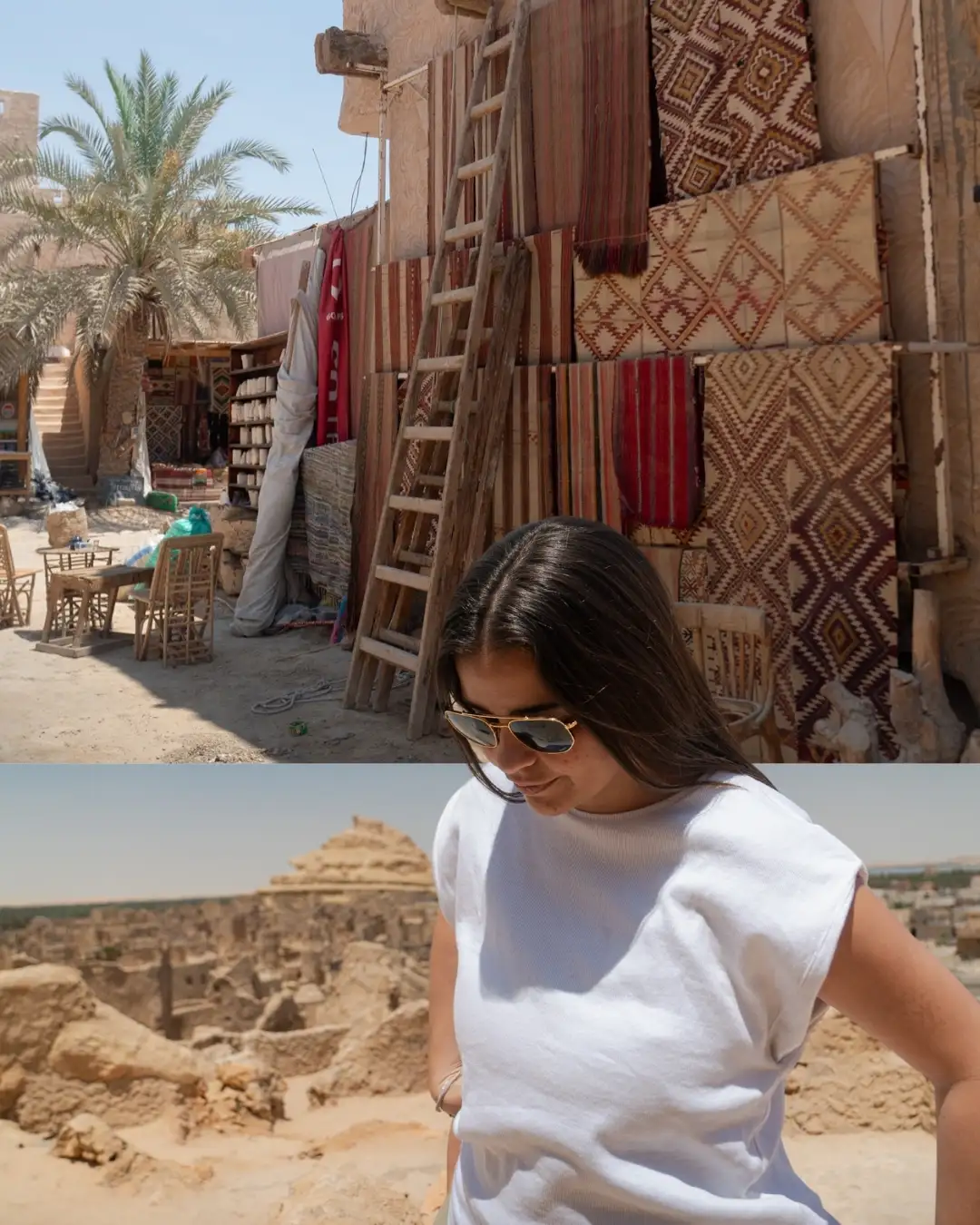
If there’s one place in Egypt that looks like pure AI but is wonderfully, magnificently real, it’s Siwa. It is worlds away from the chaotic energy of Cairo or the intense tourist hustle in Luxor. Siwa is just different, babe. It’s pure peace, rich Berber culture, and honestly, probably the most authentic place I set foot in during my entire time in the country.
Mind you, getting there is not for the faint-hearted. But because we’re proper travel mates, I’m going to tell you exactly how to visit Siwa Oasis on your own, on a budget, and how to experience the real deal—salty skin, deep history, and all. Ready? Let’s dive in.
Hold on, I’ve just spotted it on the map… Is Siwa Oasis actually worth visiting?
Beyond its incredible history (we’re talking ancient castles and rock-cut tombs), the mesmerizing salt lakes, and the endless palm groves, what shocked me most about Siwa is that you aren’t treated like a walking dollar sign here. The locals live off their dates, salt, and agriculture; tourism is just a little extra on the side. So, if you’re craving deep, authentic cultural connections, it is 100% worth the journey.
It is a much more conservative community (word to the wise: keep your shoulders and knees covered at all times), but it feels completely genuine. Plus, they don’t just speak Arabic; they have their own language, Siwi, and a profound connection to their Amazigh (Berber) roots.
I know exactly what you’re thinking: “Haha, brilliant, but I can connect with people without enduring a 10-hour bus ride.” And yes, fair point! But the history and the mind-blowing landscapes tip the scales completely. For me, it’s a resounding yes.
How to Get to Siwa Oasis from Cairo by Bus
Siwa is a proper remote destination: it sits 560 km from Cairo and 300 km from Marsa Matruh (the nearest coastal city). Those are the two main jumping-off points for your independent adventure. I’d read so many horror stories online about relentless military checkpoints, but honestly? We only had one, and they just did a quick passport check.
To get there from Cairo, I opted for the night bus, and it’s the option I’d recommend to you too, babe. The journey takes about 10 hours, and the company running the direct route is West & Mid Delta. They’re the most reliable and, as far as I know, the only ones operating large, comfortable coaches for such a long haul.
Oh, wait! Before I give you every single detail… if you’re already feeling a bit lazy about organizing it all yourself, you can always book a guided tour. It’s not my usual style of travel, but it’s totally valid! Here is a highly rated 3 day tour from Cairo if you prefer a stress free trip.


Where to catch the bus and how to buy tickets?
The buses depart from the Torgoman Station (Cairo Gateway), which is quite close to the city centre. You’ll find the departure gates on the ground floor.
You can purchase your tickets in advance online right here, or get them slightly cheaper directly at the station. I highly recommend sorting this a few days ahead. Learn from my mistake: on the way back, we were way too relaxed, forgot to book, and found ourselves completely stranded with zero seats left on absolutely every bus to every city. I’ll tell you how that drama unfolded in a second, and what you need to do so it doesn’t happen to you!
How to Leave Siwa (And What to Do If You Get Stranded!)
f your plan is to head straight back to Cairo, you just need to do the exact same journey in reverse. You can buy tickets and catch those big, comfy coaches right here.
However, we wanted to continue our journey towards Alexandria (as part of our month backpacking Egypt) and we left booking to the very last minute. When we finally went to buy tickets… surprise! There wasn’t a single seat left on any bus for the next three days. Nowhere. Not to Cairo, not to Alexandria, nowhere.
If you find yourself in the same boat, your only alternative is the local microbus area. They leave from this spot and have absolutely no fixed schedules. The “system” consists of a lovely gentleman sitting in a tiny shack, scribbling names on a crumpled piece of paper. Once the minivan is full (and when I say full, I mean packed to the rafters with people and sacks of salt), it goes.
We were the only foreigners, and it was a proper adventure (honestly, I live for these moments!). It was so busy that two entire minivans filled up before we could squeeze onto one to catch our connection to Alexandria.
Where to Stay in Siwa Oasis: Best Accommodation
Siwa’s town centre is super compact, and almost everything is within walking distance of the main square and the Shali Fortress. If you’re travelling anywhere near the summer months, air conditioning is an absolute non-negotiable. Don’t let anyone convince you that the traditional mud walls are enough to keep you cool; the desert heat is absolutely unforgiving.
The Backpackers’ Choice (Where I stayed): Al Manara Hostel. Don’t expect luxury; it’s a very simple, no-frills place. But it’s brilliantly located in the centre, comfortable, and the Wi-Fi worked a treat!
If you have a bit more budget: These two gorgeous spots, Tanirt and Soléi, look like they’ve been plucked straight off a Pinterest board.


Best Things to Do in Siwa Oasis
Let’s organize this by distance, shall we? You can easily explore everything in the town centre on foot, but for the spots further out, you’ll need to hire a bicycle or negotiate a price with a local tuk-tuk driver.
Shali Fortress: The Melted City
This 13th-century fortress is entirely built from kershef (a traditional mix of salt, clay, and mud). The unbelievable part? In 1926, three days of torrential rain hit the oasis, and the city literally began to dissolve. It sits right in the heart of the town, so it’s impossible to miss, but make sure you carve out some proper time to climb up and explore it.
Gebel Al-Mawta: The Mountain of the Dead
If Shali is where they lived, this is where they went when they passed away. It’s an ancient rock-cut cemetery, and what makes it incredible is that the tombs are carved directly into the mountain, some still beautifully decorated with paintings from the Greek and Roman periods. Entry is 100 EGP (1.60 EUR). We just walked there from the centre; it takes a breezy 15 minutes.


🧚🏽 For the following sights, it’s best to hire a tuk tuk for half a day, or rent a bicycle if you’re feeling active!
Temple of the Oracle of Amun
This is where Alexander the Great himself supposedly journeyed to ask the oracle if he was truly the son of Zeus. It’s a fascinating set of ruins offering panoramic views and a beautiful mix of Egyptian, Greek, and Roman history.
Temple of Umm Ubayd
Built out of devotion to Amun, this temple is free to visit and sits very close to the Oracle. There isn’t a huge amount left standing, but it’s well worth a quick look while you’re nearby.
Cleopatra’s Pool
Legend has it that if you bathe here, you’ll be blessed with eternal beauty. To be fair, after a day in the desert, your skin will just desperate for a rinse anyway, babe! This is where most tuk-tuk drivers will take you to wash off after visiting the salt flats.
It’s a deep, circular stone pool surrounded by lovely little shops and cafes with a wonderful, laid back vibe.
The Famous Siwa Salt Lakes
Here it is, the absolute highlight of any trip to Siwa. What people on Instagram don’t show you, though, is that this is a functioning, industrial salt mine. Right next to those mind-bogglingly turquoise pools, you’ll see massive excavation machinery.
The dream is to hire a private tuk-tuk so your driver can take you to the pools further away where there are no crowds. You can literally pick your paradise; small pools, large ones, deep greens, or vibrant turquoises and just float effortlessly.
Also, bring a large bottle of fresh water to rinse off the worst of the salt crust until you reach Cleopatra’s Spring. Alternatively, there’s usually a local man with a water tank truck offering quick showers for a small fee.
🧚🏽 Whatever you do, do not shave your legs the day before. If you have even the tiniest scratch, that salt water will sting so badly you’ll feel it in your soul.


For sunset, everyone unanimously recommends catching it from Gabal Dakrur or Fatnas Island.
Another super popular experience is exploring the Great Sand Sea in a 4×4. I didn’t do it myself, so I can’t recommend a specific company, but your best bet is to ask your hotel or your trusted tuk-tuk driver.
Where to Eat in Siwa?
Since I usually travel on a tight budget, my food sections are normally just a list of cheap cafes. But because Egypt is incredibly affordable and the restaurant aesthetics in Siwa are so remarkably beautiful, I have a few absolute gems for you:
- Tekeyet Elamir Restaurant & Café: One of the pricier options in town, but the service is so lovely and the setting is so stunning that it’s worth every penny.
- OLA Restaurant: They have a massive, varied menu and great vibes.
- Abdu Restaurant: Super popular with a fast turnover, right in the centre, and excellent service.Abdu Restaurante; mucho recambio, bien en el centro y excelente atención.
And that’s a wrap on beautiful Siwa! I really hope this guide helps you take the plunge and visit this magical desert jewel. If you’re planning a bigger adventure across the country, make sure to check out my other Egypt travel blogs.
And don’t forget to follow along on socials, hmm? Come along!
I share everything from our adventures in the Sinai Peninsula to what life is really like on board a traditional Dahabiya boat sailing down the Nile.
Have the most wonderful trip, and see you out there, fellow traveller!
Guadi xx
