Climbing a volcano to watch its neighbor erupt right before your eyes? Sounds incredible—and it’s even more amazing in person. In this article, I’m going to tell you EVERYTHING you need to know to hike Volcán Acatenango, one of Guatemala’s most popular and epic experiences.
Got a notebook handy? Let’s get organized!
Where is Acatenango Volcano?
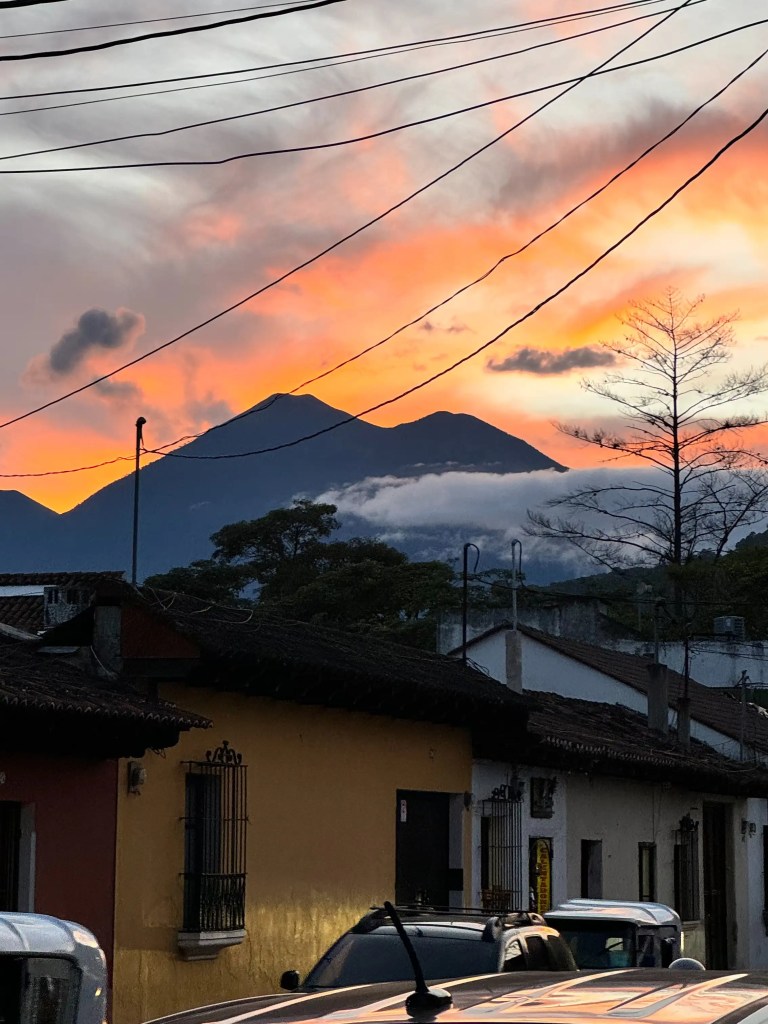
Volcán Acatenango is located in Guatemala’s central highlands, about 73 km from Guatemala City and very close to Antigua, which is the most common base for organizing the hike.
In the surrounding area, there are several small villages on the volcano’s slopes, but most travelers start the trek from the village of La Soledad, the official starting point of the hike. You don’t need to worry about getting there on your own, as most tours include round-trip transportation to the beginning of the trail. Let me explain everything.
When to go to Acatenango?
The hike up Acatenango Volcano can be done year-round, but the experience varies greatly depending on the season:
Dry season:
Dry Season (November to April): This is the best time to hike. There's less chance of rain, the trails are firmer, and the views are usually clear.
💁🏽♀️ We went during the first days of November and barely got to see the eruptions; the sky was full of clouds, it was very cold, and it drizzled off and on.
Rainy season:
The hike becomes tougher, with mud and clouds that can obscure the view of Volcán de Fuego. The upside is that there are fewer tourists, and the green landscape looks amazing.
How to get to Antigua?
Antigua is a beautiful colonial city and the most touristy in Guatemala. (Ah, if you’re planning your entire trip to Guatemala, I wrote this article just for you).
The most common way is to fly to Guatemala City (always checking Skyscanner with flexible dates to find the best prices). From the airport, you can take a van that goes directly to Antigua.
🧚🏽 Travel tip: It’s 100% worth buying your ticket in person there, as online prices are much higher.
You can also get to Guatemala by bus from Belize and Mexico; you can buy those tickets here. But once you’re in Guatemala (whether Flores or Lake Atitlán), it’s best (again) to buy your ticket in person.

How much time do you need for Acatenango Volcano?
The classic trek to Acatenango Volcano lasts 2 days and 1 night. On the first day, you hike up to the base camp (about 5 to 7 hours), where you spend the night with views of the erupting Fuego Volcano. The next day, very early in the morning, you do the final 1.5-hour ascent to the summit to watch the sunrise.
🧚🏽 I would recommend arriving in Antigua at least 2 or 3 days in advance to acclimate to the altitude. The camp is over 3,600 meters (11,800 ft) above sea level, and if you're coming from lower areas, your body will definitely feel it even more.
Acatenango Volcano Tours
First, let me clarify: it’s not mandatory to climb Acatenango with a tour, but it is highly recommended. Here’s why.
The Acatenango Volcano tours usually include:
Round-trip transportation from Antigua to the start of the trek.
Local guide familiar with the trail and the weather conditions.
A spot at the campsite (mostly shelters or small isolated cabins).
All meals included: a hot dinner, breakfast, lunch the next day, and sometimes snacks.
For me, just having accommodation at the top with views of Volcán de Fuego is worth it. At night it gets extremely cold, and I can't imagine camping alone in those conditions. The meals also make a difference: the guides provide dinner and breakfast, so you can hike with a lighter load and still enjoy a warm meal around the campfire.
Acatenango Volcano tours usually cost between 40 and 130 USD per person (based on double or triple occupancy). The price depends on the agency, what the package includes, and the level of comfort you are looking for.
Attention here: the cheapest option isn’t always the best. I’ve met travelers who had horrible experiences (wet mattresses, unreliable guides, or even missing the promised dinner). My advice is to pay close attention to reviews before booking. Make sure to choose a trusted agency that delivers what it promises. In such a demanding and cold place like Acatenango, the quality of the tour can completely change your experience.
My experience in Acatenango Volcano
I wish this were just an ad, but it’s not: this is a genuine recommendation. I found V Hiking while browsing social media, and I loved their mission and the respect they show for the local community.
Erin, the owner (along with all the guides), is from San José Calderas, a small village at the base of Acatenango. The tour starts at his mother’s house, with a big breakfast and a briefing explaining how the hike will go.
What I loved most is their mission: to provide employment to the local people so they don’t have to see risky migration to the United States as their only option. I found it sincere, necessary, and above all, consistent with what I experienced on the tour.
The guides were excellent, the food was good, and the shelters have a huge window with a direct view of the Volcán de Fuego. Imagine being warm inside, watching the eruptions without having to step out into the extreme cold.


Is it difficult to climb Acatenango?
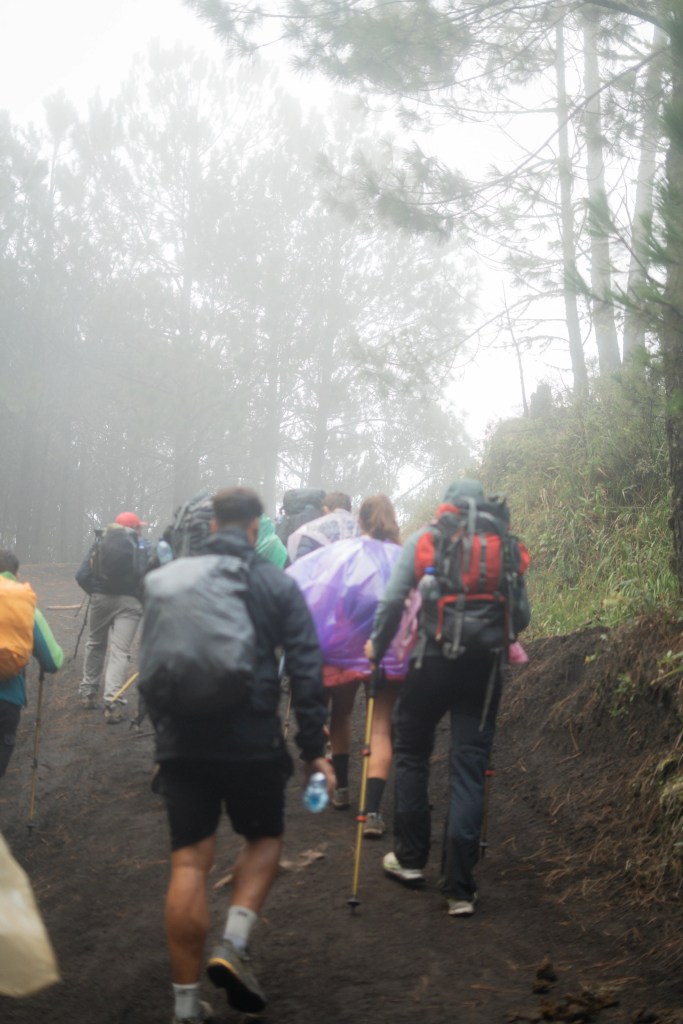
Yes, it's demanding. I won't lie: the first day involves 5 to 7 hours of steep climbing with a backpack on your shoulders, over volcanic terrain that feels like walking on sand. Plus, the campsite is over 3,600 meters above sea level, so the air gets thinner, making it even more challenging.
However, there’s no technical difficulty. You don’t need climbing skills or to navigate tricky terrain.
Often, it’s more of a mental challenge than a physical one.
Tips for Climbing Volcán Acatenango (Without Dying Trying):
- Climb slowly and at your own pace (there’s always a guide at the front and one at the back).
Look, if I could do it… anyone can!
What to bring 100% to Acatenango?
Clothes:
Layered clothing (thermal shirt, some fleece, a large jacket over a windbreaker).
Warm socks (two or three pairs, because they often get wet).
Hat, scarf or buff, and gloves (it’s really cold; your ears will freeze).
Trekking shoes (whatever you have, but if they cover your ankles, even better!)
Basic equipment
Headlamp (you'll need it for bathroom trips and for the sunrise trek day)
- Water, min of 2L for person.
- Energetic snacks (or whatever motivate you)
- Trekking poles (I rent it there)
- Paper towel
- Camera / phone and the external battery
If you're very sensitive to cold: hand warmers or those heat-boosting creams can be a lifesaver.
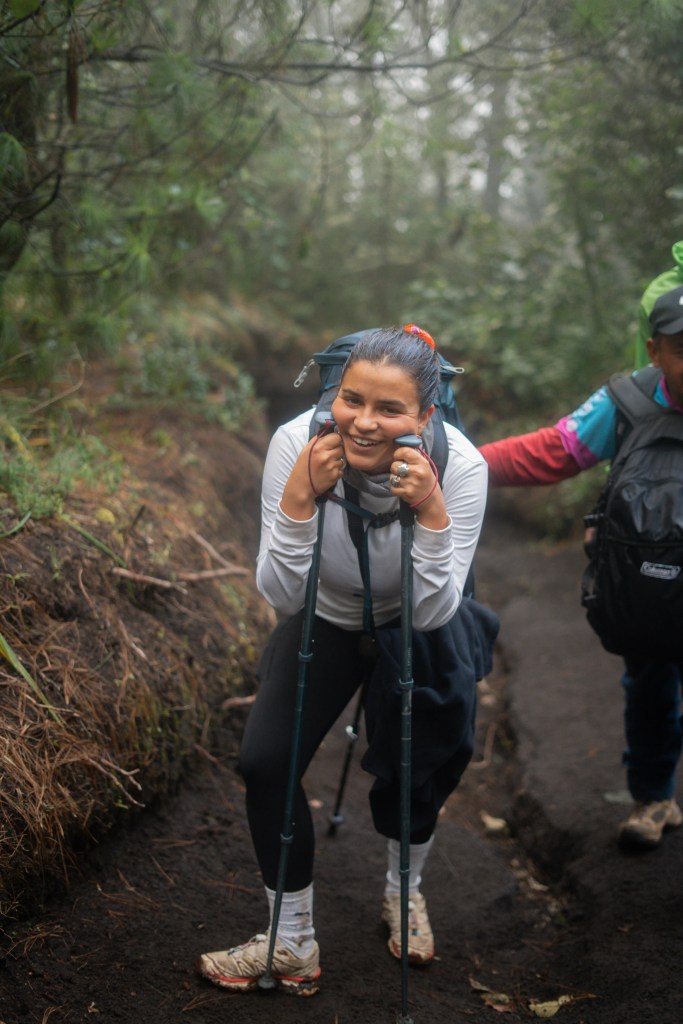
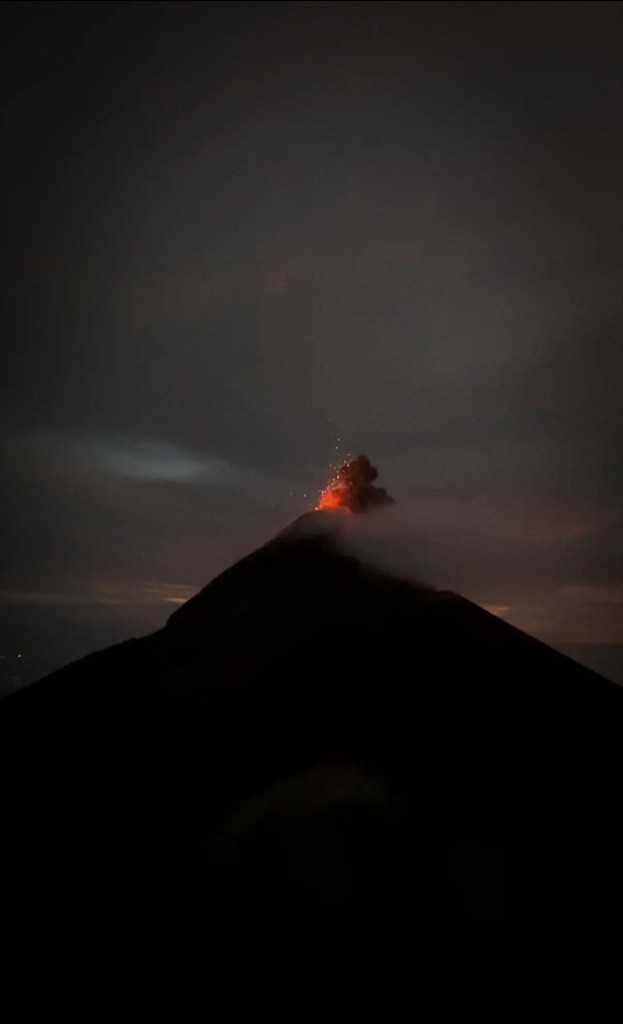
Climbing Acatenango Volcano was one of those unforgettable moments: cold, effort, and the magic of Fuego Volcano lighting up the night (though I only caught a glimpse for a second). I hope this guide helps you gather the courage to live your own experience!
If you love traveling like I do, with curiosity and plenty of stories to share, subscribe to my newsletter and receive tips, routes, and mini-adventures straight to your inbox.
And if you want to follow me day by day, follow me on Instagram: I share photos, videos, and moments that don’t make it to the blog. Alright, end of the “advertisement”! I hope you have an amazing time on Acatenango—send me photos!!! It would make me so happy.
If you love traveling like I do, with curiosity and plenty of stories to share, subscribe to my newsletter and receive tips, routes, and mini-adventures straight to your inbox.
And if you want to follow me day by day, follow me on Instagram: I share photos, videos, and moments that don’t make it to the blog. Alright, end of the “advertisement”! I hope you have an amazing time on Acatenango—send me photos!!! It would make me so happy.
Guadi.