Guatemala was one of those countries that looked pretty easy to travel around when I first looked at it on a map.
Then I started planning the route, working out transportation times and deciding which places I actually wanted to visit… and realised there were quite a few things I would have liked to know beforehand.
You don’t need to plan every single day down to the minute. In fact, I’d leave some room for spontaneity.
But there are a few decisions that can make travelling around Guatemala much easier, especially if it’s your first trip to Guatemala and you’re planning to travel independently.
Shall we?
10 Guatemala Travel Tips Actually Worth Knowing BEFORE You Go
1. Is Guatemala safe for independent travellers?
Safety is probably one of the first things you’ll wonder about when planning a trip to Guatemala. And, as always, I don’t think there’s a simple yes-or-no answer because it depends a lot on where you’re going, how you’re travelling and the precautions you take.
Personally, I felt quite safe during our trip, especially in places like Antigua and the main tourist destinations. That doesn’t mean you should completely switch off, though.
I’d be more cautious in Guatemala City and around less touristy areas, particularly at night, and I’d pay attention when using public transport such as chicken buses; right like I tell you on my 10-days Guatemala Itinerary.
If you’re travelling independently, you don’t need to be constantly worried, but you do need to use common sense. Avoid walking around unfamiliar areas alone at night, keep an eye on your belongings and ask your accommodation which areas or routes are best avoided.
Is Guatemala safe for solo female travellers?
I travelled around Guatemala with Micha, so I can’t speak from personal experience about travelling around the country completely solo.
However, I met several women travelling alone, including people staying in Antigua and studying Spanish, and they told me they felt comfortable travelling around.
2. What are the requirements to travel to Guatemala?
Guatemala classifies countries into different immigration categories: some nationalities are visa-exempt, while others require a consular or consulted visa. For example, the US, UK, Australia, New Zealand and EU countries are currently listed under Category A, which is visa-exempt. This classification can change, so it’s always best to check the official information before your trip.
If you’re entering Guatemala by land, pay a little more attention to the immigration process; make sure your entry is correctly registered and that you receive the corresponding passport stamp when applicable.
Your passport must be valid for at least 6 months from the date you enter Guatemala.


3. What is the best time to visit Guatemala?
The dry season in Guatemala runs from November to April and is generally considered the best time to visit. These are the months with less rainfall, which makes them particularly interesting if you want to go trekking, climb volcanoes or travel between different destinations by land. December, January and February are also the busiest months.
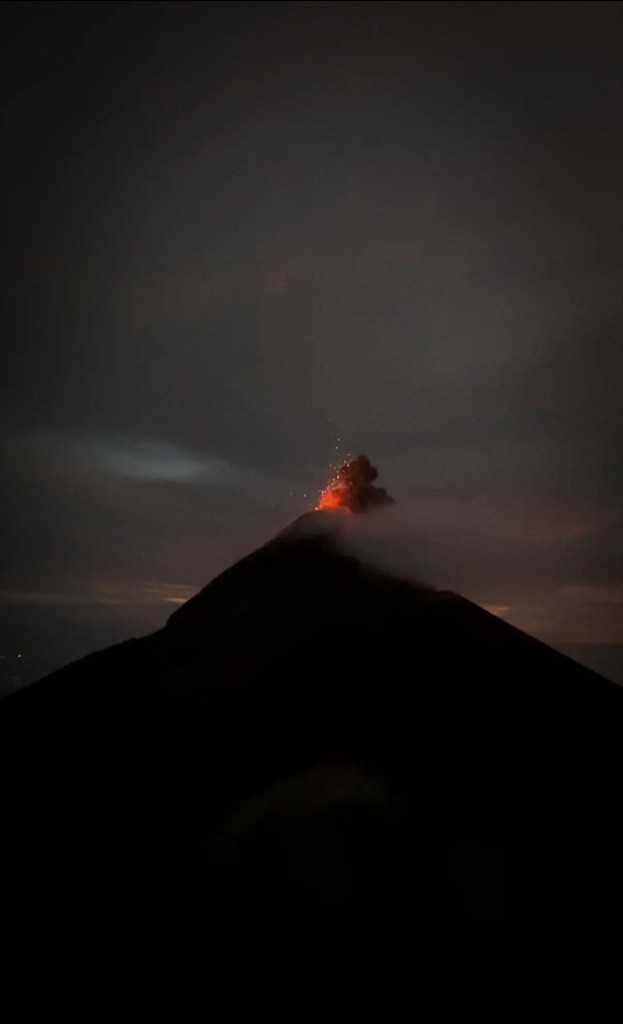
The rainy season runs roughly from May to October, but that doesn’t mean it’s going to rain all day, every day. It can, however, affect some of your plans, especially the views of Volcán de Fuego during the Acatenango hike.
We actually travelled around Guatemala during the last 10 days of October. We had two half-days of rain, but the volcano was quite cloudy.
There are also some celebrations that would be amazing to experience in Guatemala. Semana Santa in Antigua, for example, includes processions, colourful sawdust carpets and different religious and cultural celebrations. It has even been declared Intangible Cultural Heritage of Humanity by UNESCO. Guatemala’s Independence Day is celebrated on 15 September, so it could also be a beautiful time to visit.
🧚🏽 If you’re travelling during local celebrations, especially Semana Santa, don’t forget to book your accommodation in advance. Prices increase a lot and places tend to fill up well ahead of time.
4. Choose a backpack, not a suitcase, for an intense trip around Guatemala
If you’re travelling around Guatemala independently and you’re going to change accommodation several times, I’d choose a backpack over a suitcase. Not because travelling with a suitcase is impossible, but between shuttles, cobbled streets, stairs, accommodation and different types of transport, carrying your luggage can end up being much more practical.
And if you’re planning to hike Acatenango, keep in mind that the luggage you need for the trek isn’t necessarily the same as what you’ll use during the rest of your trip. So it can also be useful to leave some of your things at your accommodation and take only what you need with you.
💁🏽♀️ If you’re thinking about hiking Acatenango, this guide will be really useful.
5. Book things in advance
Booking accommodation in Guatemala
The sooner you can book your accommodation, especially in Antigua, the better. Guatemala is receiving more and more travellers, and the hotels, hostels and apartments that are well located, nice and offer good value for money tend to be the first ones to sell out.
I wrote a specific article with my hotel and hostel recommendations in Antigua because, with so many options, choosing where to stay can be quite difficult. I already did that work for you.
Another thing to keep in mind is the Acatenango tour. If you want to do the trek, choosing who to do it with is important because the experience can vary quite a lot depending on the company, group size, campsite, food, equipment included and how the ascent is organised. During high season, the most popular tours can also fill up in advance.
So, if Acatenango is one of the main reasons you’re travelling to Guatemala, I wouldn’t wait until you’re already in the country to decide who you’re going to do it with.
Booking transportation in Guatemala
If you’re planning to fly within Guatemala, I do recommend organising it in advance and comparing prices. To look for flights, you can check Skyscanner and see what options are available for your travel dates.
With minibuses, on the other hand, you have quite a bit more flexibility. You can check routes and schedules on platforms such as GuateGo, but to book them, I’d recommend doing it directly through your accommodation the day before to get a better price.
💁🏽♀️ If you want to know how to get around Guatemala, what transportation options are available and when it’s best to use each one, you can read my guide on how to get around Guatemala.
6. Think in hours, not kilometres (how long does it take to travel around Guatemala?)
One of the things that can surprise you most when planning a trip around Guatemala is that two places that look relatively close on the map can actually take several hours to reach.
So, when you’re putting together your itinerary, don’t calculate your journeys just by looking at the distance between two points. If you’re travelling around Guatemala independently, it’s much better to think in terms of actual travel time, and I’d even add a couple of extra hours.
When we travelled from Antigua to Panajachel, we were told the journey would take 3 hours even though it’s only around 75 km. But, without much explanation, we ended up waiting for a “replacement” bus for 2 hours and arrived at our destination 3 hours later than expected. So yes; when planning your Guatemala itinerary, leave some room for these kinds of things.
7. Acclimatisation in Guatemala (especially for Acatenango)
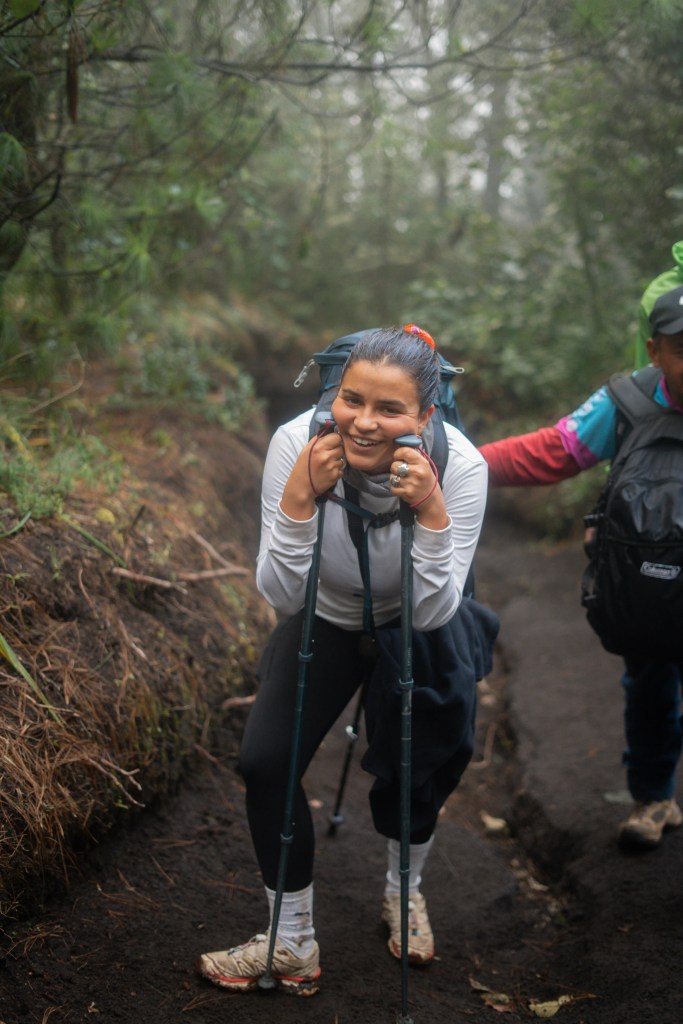
If you’re planning to climb one of Guatemala’s volcanoes, don’t underestimate the altitude or the physical effort. You don’t need to be a professional mountaineer to do treks like Acatenango, but it’s also not a hike I’d leave for “I’ll see how I feel when I get there”.
Acatenango reaches over 3,900 metres above sea level, so it’s better to give yourself a few days to acclimatise in Antigua before climbing the volcano.

8. How many days do you need to travel around Guatemala?
If you have 10 days, you can put together a really nice route combining some of the country’s main highlights, but you’ll have to choose. If you have 15 or 20 days, on the other hand, you can create a much more complete itinerary and add destinations that simply wouldn’t fit into a shorter trip.
Between the long transfers, trekking days and places where it’s actually worth staying for more than one night, the days go by pretty quickly.
🧚🏽 If you only have 10 days to spend in Guatemala, you can see exactly how I organised my own route in my 10-day Guatemala itinerary.
9. Can you pay by card in Guatemala or do you need cash?
Most accommodation, tours, restaurants and cafés accept card payments, but in Guatemala, cash is still king!
Transport, small businesses, street stalls and many of the cheaper accommodation options still require cash payments. You can withdraw money directly from ATMs in Guatemalan quetzales, or bring cash in your own currency (such as EUR, USD or GBP) and exchange it at banks or exchange houses.
Keep in mind that in more remote places, ATMs are less readily available, so plan accordingly.
10. What internet should you use in Guatemala? Local SIM vs eSIM
For me, as convenient as eSIMs are, local SIM cards are much cheaper and usually aren’t a headache to get.
Tigo and Claro are the main mobile providers in Guatemala, and both offer internet plans. The price of the SIM card depends quite a lot on where you buy it.
On the other hand, eSIMs are much easier and more convenient to use. If you’re only staying for a short time, they’re definitely worth considering. I used Airalo; I activated it before landing and had very good internet throughout the whole trip, considering that we went into the middle of the jungle several times.
Now it’s time to start planning Guatemala!
Guatemala is such a gem in Central America, and the more you research it, the more excited you get about visiting.
If you’re still planning your route, start here:
-> 10-Day Guatemala Itinerary | Route, Travel Tips & Costs
I’m also writing a longer itinerary for 15 or 20 days travelling around Guatemala.
And you’re probably not going to want to leave without hiking Acatenango, so you can read Volcán Acatenango: Everything You Need to Know to prepare and book the right tour.
And you and I will see each other in another destination, right?
If this article helped or guided you, you can support my blog by inviting me for a lil coffee ☕. I really appreciate it.
Guadi.