
Welcome to your Kyoto trip planning! Yaaaaay!! I know all too well that building this itinerary is just as exciting as it is overwhelming, so this guide will help you get organized and pick the perfect area without losing your mind.
Unlike Tokyo, Kyoto doesn’t have an endless subway and train network. Local transit relies heavily on public buses, which can get extremely crowded during peak hours. That’s why picking the right location based on how many days you have is crucial so you don’t waste precious hours travelling from one side of the city to the other.
Here you’ll find not just lovely hotels, but strategic, high-value recommendations tailored to your budget, travel style, and goals for the city. Shall we?
⏱️ In a rush? Here is the quick summary
I would stay in Kyoto for at least 4 days and base myself in Gion. I reckon picking a budget friendly hotel that is super comfy is the way to go, using it as a base to explore the city and take a half day trip out to Uji.
If your budget allows, I would definitely splurge on 1 night for the full experience at a traditional ryokan. Use that day to wander around the local area, make the most of the ryokan facilities, and maybe even book a tea ceremony or a geisha performance to fully immerse yourself in Japanese culture for the day.


Key Tips Before Booking Accommodation in Kyoto
Book WELL in advance
Kyoto is one of Japan’s most sought-after destinations; well-located hotels offering great value sell out remarkably fast—often up to 6 months ahead. This is especially vital if you’re travelling during peak seasons like spring or autumn to experience sakura (cherry blossoms) or momiji (red autumn leaves).
Prioritise Free Cancellation
Hand in hand with booking early, the smartest strategy is securing your spot with a free cancellation option to keep your plans flexible. Once you have a reliable base locked in, you can keep looking for last-minute deals or upgrade your choices.
Factor in the local tourist tax
Kyoto levies a municipal accommodation tax per person, per night. Rather than a percentage, it’s a fixed fee based on the room rate—ranging from 200 JPY to 1,000 JPY per person, per night for most hotels (higher for luxury stays), roughly 1 to 6 EUR.
Keep in mind that platforms like Booking.com or Agoda generally do not include this tax in the online total. It is usually settled at check-in in local currency cash.
Prioritise transport proximity
Aim to stay within a 10-minute walk of a subway station, train station, or major bus stop. We lost a lot of time walking everywhere because our hotel didn’t have great transit connections, and in Kyoto, streamlining your commutes completely transforms your travel experience.
Where to Stay in Kyoto? Neighbourhood Guide and Recommended Areas

⚠️ All the hotels I recommend in this guide, and throughout my blog, are hand-picked. I’ve researched the neighbourhoods and compared different accommodation options, reviews, photos and prices to give you the most genuine recommendations based on my own experience in the city.
Downtown Kioto / Kawaramachi
This is the modern heart of the city, allowing you to walk directly to key tourist spots like Pontocho Alley, the Kamo River, and Nishiki Market. Public transport connections by bus and train are exceptional (via the Keihan and Hankyu lines), and it offers the highest concentration of dining options, shopping, and nightlife.
Drawbacks: High foot traffic at all hours, less traditional street charm in the immediate surrounds, and slightly higher room rates.
Recommended Hotels in Downtown Kyoto
Budget: We stayed at WeBase. It’s the most affordable option I found that remains genuinely lovely. Located right next to a 7-Eleven and close to restaurants, though a slightly longer walk to main sights. HIVE is another great option offering very reasonably priced shared dorms.
Mid-Range: The BnA Alter Museum is far from standard, but comes at a fantastic price point. Alongside its prime location, it features unique rooms designed by local artists. For a classic Japanese aesthetic, consider Hotel Muso.
Luxury: I’d choose The Hiramatsu Kyoto without hesitation. Exceptional design, flawless attention to detail, and top-tier amenities. Ideal for anniversaries or honeymoons, with rates starting around 300EUR per night depending on the season.
Hiiragiya is one of Kyoto’s most famous and exclusive ryokans, located just north of Downtown. While I wouldn’t personally spend that amount for a single night, I’ve included it because it’s so widely known that you might want to know where it is!


Gion | South Higashiyama
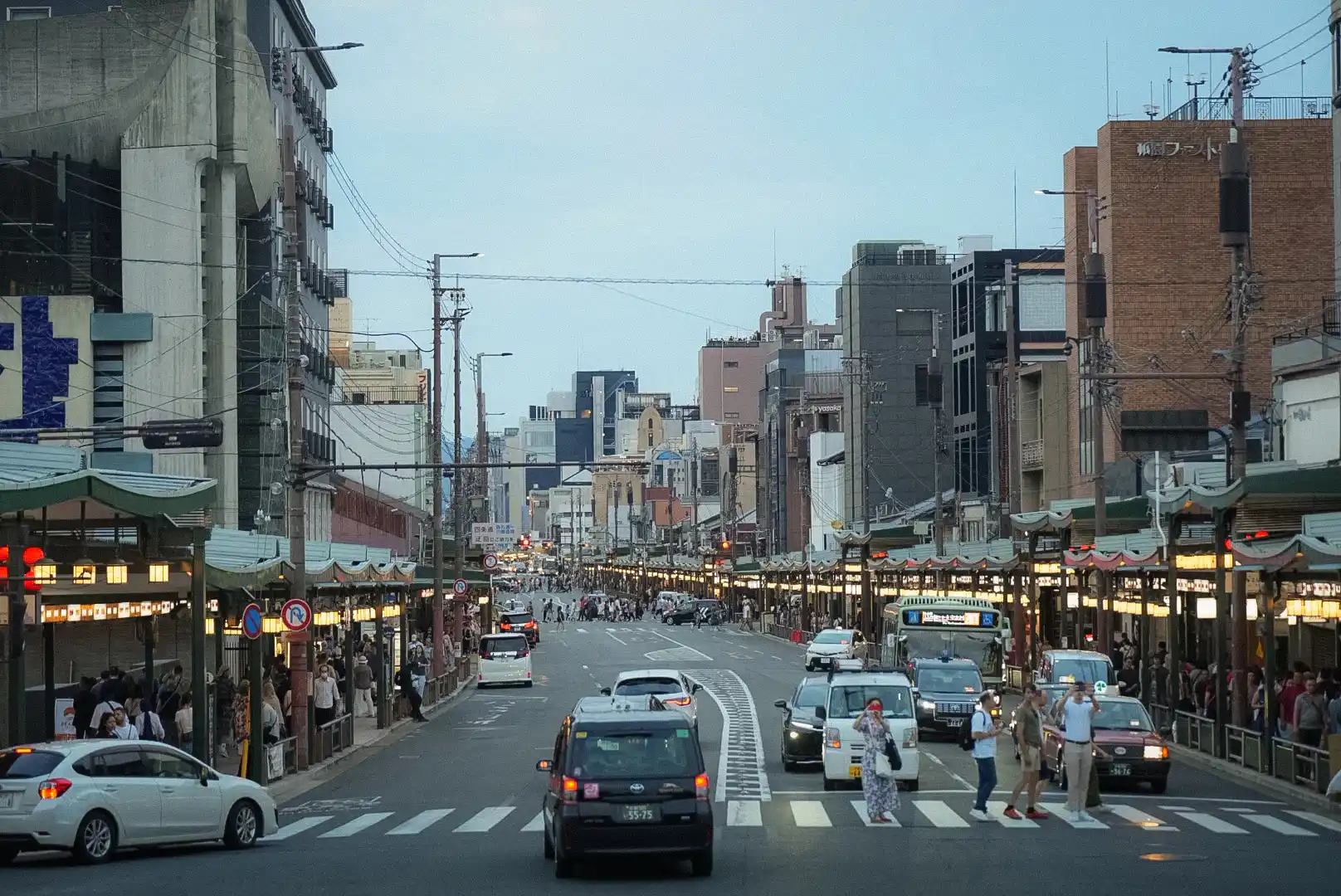
The picture-postcard side of Kyoto: cobblestone streets, preserved wooden townhouses (machiya), and the occasional evening geisha sighting. You’re within easy walking distance of iconic temples like Kiyomizu-dera and Yasaka Shrine, with a peaceful atmosphere after day-trippers depart.
Drawbacks: Extremely crowded streets during the day, shops closing early (6:00 PM – 7:00 PM), and limited direct subway access.
Recommended Hotels in Gion & South Higashiyama
Budget: Apartment Hotel 11 and Sauna & Capsule Hotel are two brilliant budget options in the area. The former offers private rooms, while the latter provides capsule setups where you can choose top or bottom bunks.
Mid-Range: Hoshiya Ryokan Kiyomizuya offers superb value with traditional accommodations. On the threshold of luxury, Yadoru is a standout option.
Luxury: Both The Hotel Seiryu and Park Hyatt Kyoto are situated in one of Kyoto’s most serene and scenic spots.


Kyoto Station Area
The main transport hub of the city. Highly recommended if you have a short stay, are arriving via the Shinkansen (bullet train), or plan to take multiple day trips. The central bus terminal is right at your doorstep, along with dozens of affordable dining options inside the station complex.
Drawbacks: Lacks traditional or historic character; it’s a modern, commercial district with heavy traffic. You’ll rely on public transport or taxis for most sightseeing.
Recommended Hotels Near Kyoto Station
Budget: Hotel Androoms is one of the best budget picks here, featuring clean design and guest onsen facilities. Kyoto Century Hotel is another solid option located moments from the platform.
Mid-Range: Yadoya Kikokuso, a traditional Japanese inn with a charming interior garden.
Luxury: Nazuna Kyoto Higashi, click the link to see for yourself; the pictures speak for themselves.

If you are travelling to Kyoto for a special occasion, here is the curated hotel list I have been saving for years:
Central Kyoto / Imperial Palace
Situated north of Downtown surrounding the Kyoto Imperial Palace gardens. A residential, leafy, and tranquil area filled with specialty coffee shops and well connected via the Karasuma Subway Line.
Drawbacks: Fewer late-night dining options and mandatory public transit to reach most major temples.
Recommended Hotels Near the Imperial Palace
Budget: Hotel Ninja Black, featuring sleek design in a quiet residential setting with strong reviews.
Mid-Range: Mitsuki Kyoto, a local ryokan offering fantastic breakfasts and complimentary bicycle rentals.
Luxury: Kamo Residences by Reflections, featuring floor-to-ceiling windows, private terraces, and immaculate attention to detail.
Arashiyama
Located to the west at the foot of the mountains along the Katsura River. The ultimate location to disconnect for 1–2 nights surrounded by nature, enjoying the bamboo grove and nearby temples before tour buses arrive.
Drawbacks: Distance from central Kyoto (30–40 minutes by train or bus) and very quiet at night, with most shops closing early.
Recommended Hotels in Arashiyama
Budget: Guest House Atagoya and Riverside Arashiyama stand out as the top budget-friendly options.
Mid-Range: Tsukishiro Garden & Art is brand new and beautifully designed. Hanaikada sits at the higher end of mid-range, offering on-site onsen baths.
Luxury: Muni Kyoto, featuring fine dining, breathtaking river views, and high-end service.


Ryokan vs Traditional Hotel | Which is Best in Kyoto?
First, let’s define what a ryokan actually is. A ryokan is a traditional Japanese inn established during the Edo period to accommodate travellers along ancient highways.
Today, it offers a complete cultural experience: tatami mat flooring, shoji paper sliding doors, futon bedding instead of raised beds, natural onsen hot springs, and refined Japanese hospitality (omotenashi).
And while it’s an essential experience on a trip to Japan, it comes down 100% to what you’re looking for at this stage of your journey and the other destinations on your itinerary.
Is Staying in a Ryokan in Kyoto Worth It?
A ryokan stay is a quintessential Japan experience, but its value depends on your overall route. If your itinerary focuses mainly on Kyoto, Osaka, and Tokyo, Kyoto is your most culturally immersed stop, making it the ideal spot to spend at least one night in a ryokan.
However, if your journey includes spots like Koyasan, quiet hot spring towns like Yunomine Onsen or Ginzan Onsen, or historical routes like the Kiso Valley or Kumano Kodo, you don’t necessarily need to book a ryokan stay in Kyoto.
- You want the full cultural experience: dining on a multi-course traditional kaiseki meal, wearing a yukata throughout your stay, and unwinding in thermal baths.
- You want to completely disconnect for 24 hours from the fast pace of travel and dedicate time to simply enjoying the accommodation itself.
- You prefer practicality: western-style raised beds, plenty of room to open large suitcases, and flexibility with check-in and check-out times.
- You plan on spending the entire day out exploring the city and just want a comfy place to shower and get a good night’s sleep at a more budget-friendly price.
Frequently Asked Questions About Staying in Kyoto (FAQ)
How many days should you stay in Kyoto?
For a first visit, plan for at least 3 to 4 full days. Kyoto has dozens of attractions, and major temples are spread across different corners of the city.
What is the best area to stay for first-timers wanting to see everything?
Downtown Kyoto (Kawaramachi) is unbeatable. You get the best variety of restaurants, shops, and direct transport links via bus and train lines, plus easy walking access to nightlife areas like Pontocho and Gion without depending on late-night transit.
How far in advance should you book a hotel in Kyoto?
Aim to book 4 to 6 months in advance. If travelling during peak seasons like sakura (cherry blossom in March/April) or momiji (autumn leaves in November), book 6 to 8 months ahead as high-value hotels fill up fast.
Should you stay in Kyoto or Osaka?
Both. While only 30 minutes apart by train, the two cities offer completely different atmospheres: Kyoto is historic and culturally centered, while Osaka excels in street food culture, neon lights, and nightlife. Splitting your nights gives you the best of both worlds. For detailed planning, check out my 3-day Osaka itinerary and Osaka accommodation guide.
Is Uji worth visiting?
Yes, absolutely! Uji is less than 30 minutes by train from central Kyoto, famous for producing Japan’s finest matcha and housing the iconic Byodoin Temple (featured on the 10 JPY coin). Take a look at my Uji travel guide to plan your trip.
Continuing Your Journey Through Japan?
Kyoto was the third stop on my nearly two-month journey across Japan—and an absolute favourite, offering a distinct contrast to Osaka and Nara. From here, we trekked the Kumano Kodo, visiting its three grand shrines and atmospheric villages like Yunomine Onsen.
Next came the Shimanami Kaido, a 70km coastal cycle route across six islands, followed by an overnight ferry to Beppu (Japan’s hot spring capital) and the beaches of Ishigaki.
Tokyo came later alongside the Kiso Valley, ending with views of Mount Fuji. You can explore all these detailed guides in my dedicated Japan travel section.
I hope this guide was super helpful and that you have an absolute blast in Kyoto!
PS. If this article popped up at just the right time and my blog genuinely helped you plan your trip, you can support this project by buying me a coffee. Cheers!
Guadi.
