If you are currently planning your Euro Summer, you have probably noticed it already: Albania is on everyone’s minds. However, you might have also stumbled upon the first great travel myth: “If you don’t rent a car, it’s impossible to explore the country.”
Let me tell you right now that not only is it entirely possible, but travelling by public transport also grants you a connection to the local culture that you would completely miss from inside a rental car. After backpacking across the country using furgons (the local minibuses) and buses, I finally understood how the actual logistics, distances, and Albanian rhythms work.
If I had to plan my 10 day trip from scratch today, this is the exact itinerary I would follow. This route is fully optimised to help you make the most of every single corner, enjoy the stunning landscapes, and, above all, escape the massive crowds and tours. Pack your camera, shall we?
⏱️ In a rush? Here are my favourite hotels in Albania:
ps. If this itinerary has reached you at the perfect time and helps ease your trip planning, you can support my work by buying me a coffee here. Thank you so much!
How to Get Around Albania Without a Car | Real Logistics
Getting around by public transport in Albania is a true adventure in itself. The backbone of the national network consists of furgons, minibuses that connect the main towns and cities.
Now, you need to be aware that the logistics require a bit more planning, and you will have less flexibility with timetables compared to driving your own vehicle. You won’t find official apps to check frequencies here; more often than not, you will have to double-check timetables directly at the bus stop the day before. Patience is absolutely key. But, if you love interacting with locals, experiencing authentic cultural exchanges, and welcoming that spontaneous spark that comes with independent travel… you are going to absolutely love it!
💡 If you want to master the art of Albanian bus stations, understand ticket prices, and learn how to survive the furgons completely stress-free, I have shared all my insider secrets in my practical guide to travelling Albania by public transport.
10 Days Itinerary for Albania
- Day 1-3: Sarande y Ksamil
- Day 3-6: Himare
- Day 6-7: Gjirokaster
- Day 7-8: Beret
- Day 8-9: Tirana
- Day 9-11: Shkodër – Theth
🧚🏽 This breakdown counts from check-in day to check-out day, making a total of 10 nights and 11 days.
(map)
How to Get to and From Albania | Border to Border
Planning how to enter and exit Albania is the first major puzzle to solve when you are relying on public transport. Nowadays, the country is incredibly well-connected, with plenty of budget flights landing in Tirana (especially from Italy) you can check the latest routes on Skyscanner.
However, if you want to design a more dynamic journey and take full advantage of the Balkan geography, you can do exactly what I did.
For this 10 day itinerary, my top recommendation is to enter from the south. I booked a flight to the Greek island of Corfu and, from there, took the fast ferry across to Sarandë, which takes less than an hour. This is a brilliant option because it saves you the long overland journey from Tirana down to the coast, meaning you can start your holiday with the sea right in front of you.
Once you finish the route up north, instead of heading back down to Tirana, you can make use of the proximity to the border and cross straight into Montenegro. There are regular buses connecting Shkodër with Podgorica or Kotor; you can check these transport combinations here.

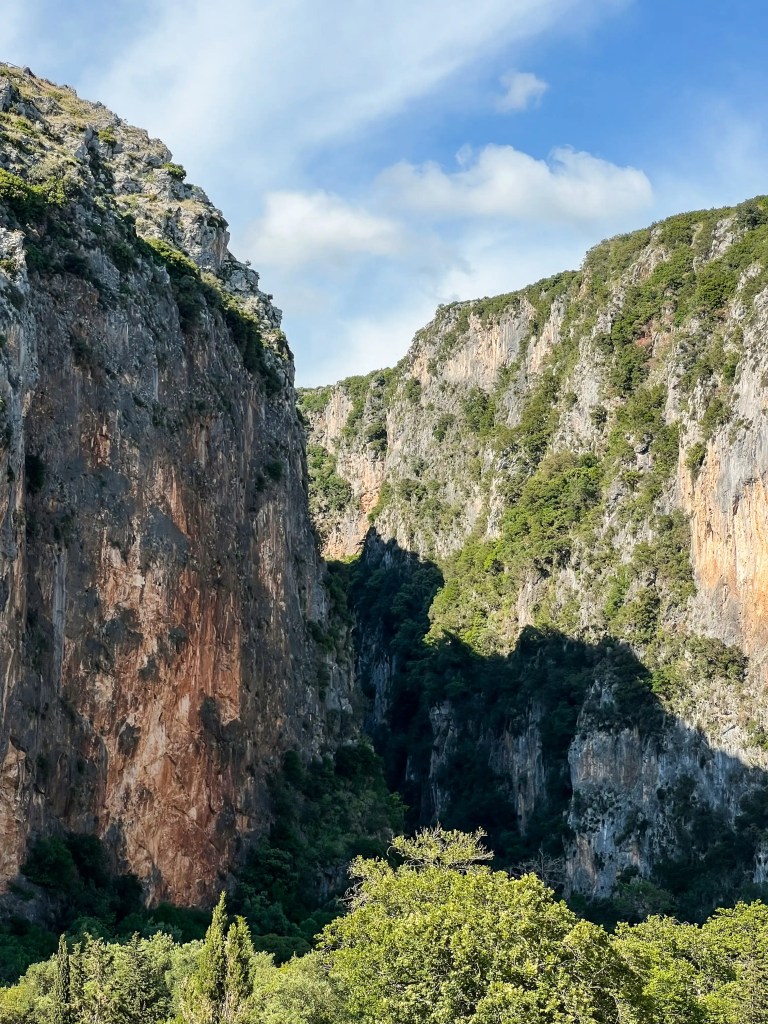

Albania Itinerary: Destination by Destination
Sarandë and Ksamil: The Turquoise Waters of the South (2 Nights)
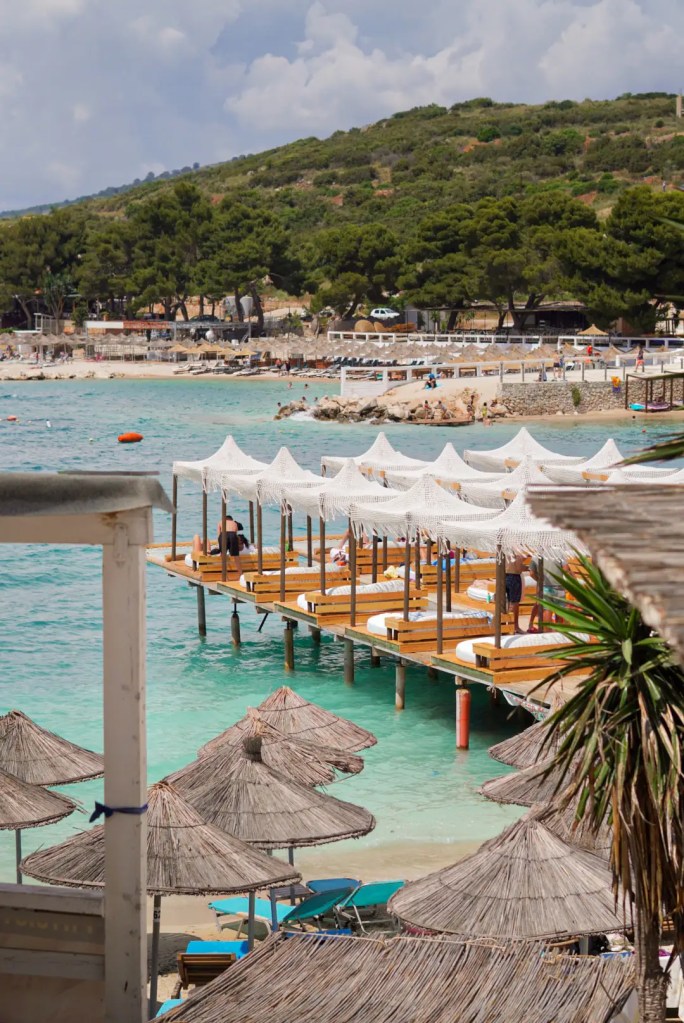
Ksamil is one of the main reasons Albania has suddenly gone viral. Those postcard perfect views of crystal clear turquoise water that look just like the Caribbean, combined with beachfront beach clubs featuring wooden sunbed platforms over the sea, will blow your mind at first glance. But, to be completely honest, it disappointed me a little bit.
It is the most commercialised corner of the Albanian Riviera, and the entire beachfront is heavily built up.
If your ideal holiday involves switching between rented parasols, swimming, fresh seafood, and cocktails, then it is your perfect destination. If, on the other hand, your travel style is all about discovering hidden coves, beaches surrounded by untouched nature, peace, and a more authentic local atmosphere… then you might not enjoy Ksamil quite as much.
When travelling without a car, it might seem like your choices are limited, but that is simply not true. I walked a little further out to Pulëbardha Beach, and the entire vibe shifted: fewer crowds, wilder nature, and a much more genuine feel.
🧚🏽 There is also a brilliant boat tour available to visit the 5 Ksamil Islands.
💡 If your primary goal for this trip is sun, sand, and sea, I have done all the research for you and put together this specific guide to the best beaches in Albania so you know exactly where to go.
How to get to Sarandë / Ksamil:
For this itinerary, the master move is flying into Corfu (Greece) and catching the ferry to Sarandë. In my case, I arrived at 7:00 PM, so I didn’t have enough time to continue straight to Ksamil that evening. The following morning, you can catch the local bus, which drops you right in the center in about 30 minutes to start your day nice and early.
Where to stay:
Sarandë: Both Vega 43 Hostel and Hotel Venera boast excellent locations. Ideally, you want to be close to the promenade, right between the ferry terminal and the bus stops.
Ksamil: Vila Islands View is perfect if you are travelling as a couple or with friends, whilst Brothers Of The World is the only proper hostel in the village.
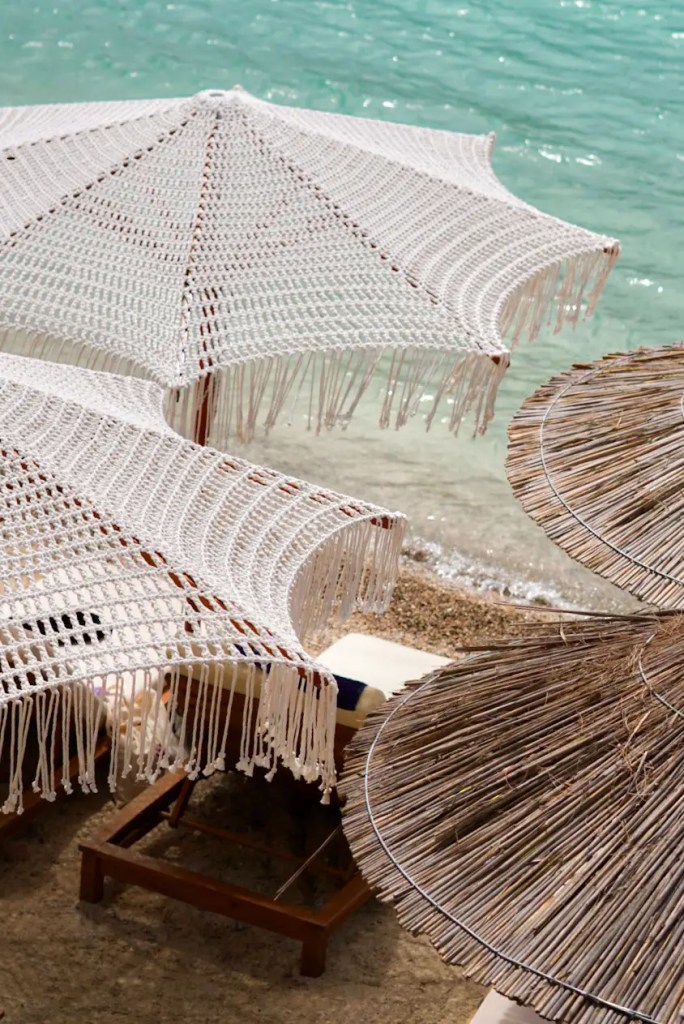
Himarë: The Most Authentic Coastal Gem (3 Nights)
For me, this is where the true magic of the Albanian coast actually begins. Himarë has a far more laid back, unpretentious energy and a fantastic, authentic traveller scene.
I dedicated a bit more time to this stop because the beaches in this area are spectacular; both the ones right in the town and the surrounding bays, which are incredibly easy to reach by furgon.
🧚🏽 For a deeper dive into the coast, you can continue reading my intensive beach guide here. Alternatively, if beach days aren’t your main motivation, you could easily take a day off Himarë and add it to Shkodër instead.
How to get to Himarë:
First, you will need to catch the early local bus from Ksamil back to Sarandë. From there, you can board one of the larger buses up to Himarë. If you cannot secure your ticket online, head down to this specific address in Sarandë, where you will find updated timetables or, at the very least, helpful directions.
Where to stay:
Himarë is an absolute treat when it comes to accommodation. Have you seen the breathtaking views from Seaside Hotel? Even though it sits a little further up, about five different travel groups highly recommended Hostel on the Hill to me, and a gorgeous boutique hotel has just opened in that same area.
They also rent out pre-pitched tents at the local campsite; incredibly cheap and comes with brilliant reviews.
Gjirokastër: The Historic Stone City (1 Night)
Here, the landscape transforms completely. Think steep, narrow alleys paved with grey stone, 17th century fortified Ottoman houses, and an imposing castle guarding the entire valley from above. It is one of the finest Ottoman treasures you can explore in Albania.
🧚🏽 If you want to avoid dealing with smaller buses, constant check-ins, and packing your backpack every day, you can choose to visit Gjirokastër on a guided day trip from Tirana instead.
How to get to Gjirokastër:
Hop on a furgon heading inland from Himarë. The journey takes around 2 to 3 hours, winding through dramatic valleys and stopping at remote villages where you will likely be the only tourist around. The driver will drop you off in the lower, modern part of the town.
Where to stay:
As a budget-friendly option, I would choose Medieval Rooms, However, if you can stretch your budget just a little bit, I don’t think there is a more beautiful place than Hotel SS KEKEZI. The upper part of Gjirokastër is by far the most charming area, use the castle as your geographical guide to pick the best location.
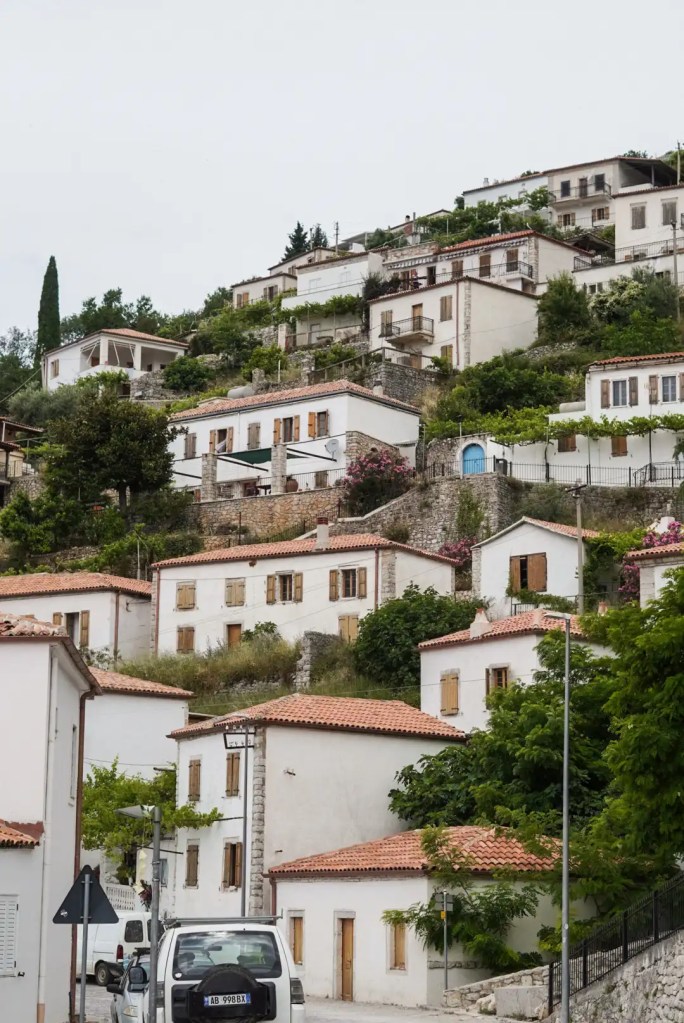
Berat: The Town of a Thousand Windows (1 Night)
Berat isn’t packed with typical tourist attractions; it is a beautifully simple, historic Ottoman town. Here, the endless rows of windows seem to watch your every move, the cobblestone alleys hide some of the best traditional restaurants, and the panoramic views from the fortress are stunning. For me, the real magic happens when the town lights up at sunset. If you want to skip the logistics for a day, there are also excellent day trips to Berat from Tirana.
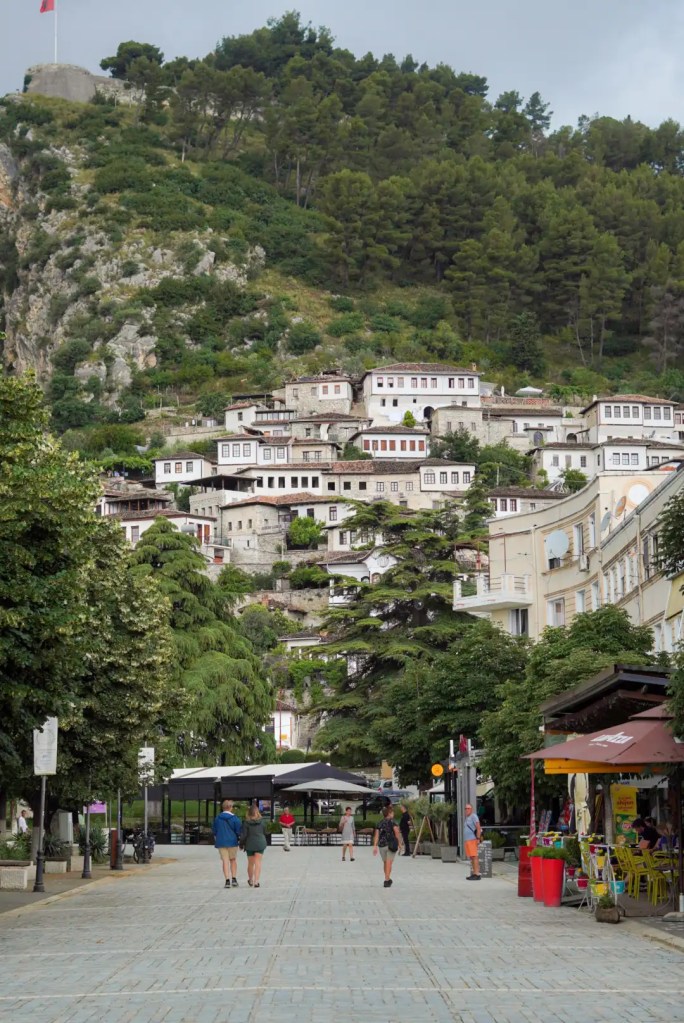
How to get to Berat:
The furgon journey from Gjirokastër to Berat is direct, but it does take quite a while and frequencies are low. Make sure to ask your hotel hosts about the latest schedule the moment you arrive in Gjirokastër. The bus will drop you off at the main terminal, which sits slightly outside the historic centre, but you can jump on a local connection to get dropped off right in the heart of town.
Where to stay:
Personally, I would choose the lower area of Berat near the church, simply because you will find a better selection of restaurants, supermarkets, and evening activities. I stayed at Hanna’s Hotel and absolutely loved it, especially the hosts! I also vividly remember Berati Castle Hotel, which offers unmatched views. If you are heading to Berat as a couple, definitely check that one out.
Honestly, I absolutely fell in love with Berat; it provided a gorgeous transition between the sea and the mountains. In fact, I loved it so much that I wrote an exclusive, dedicated guide to the town, which you can read right here.
Tirana: A Stroll Through the Capital (1 Night)
Tirana might not be a ‘pretty’ city in the traditional sense, but it boasts a vibrant urban energy and a recent history so dense that it completely hooks you. It is well worth exploring via a guided walking tour to understand its sharp contrasts and, of course, to enjoy its fantastic coffee culture.

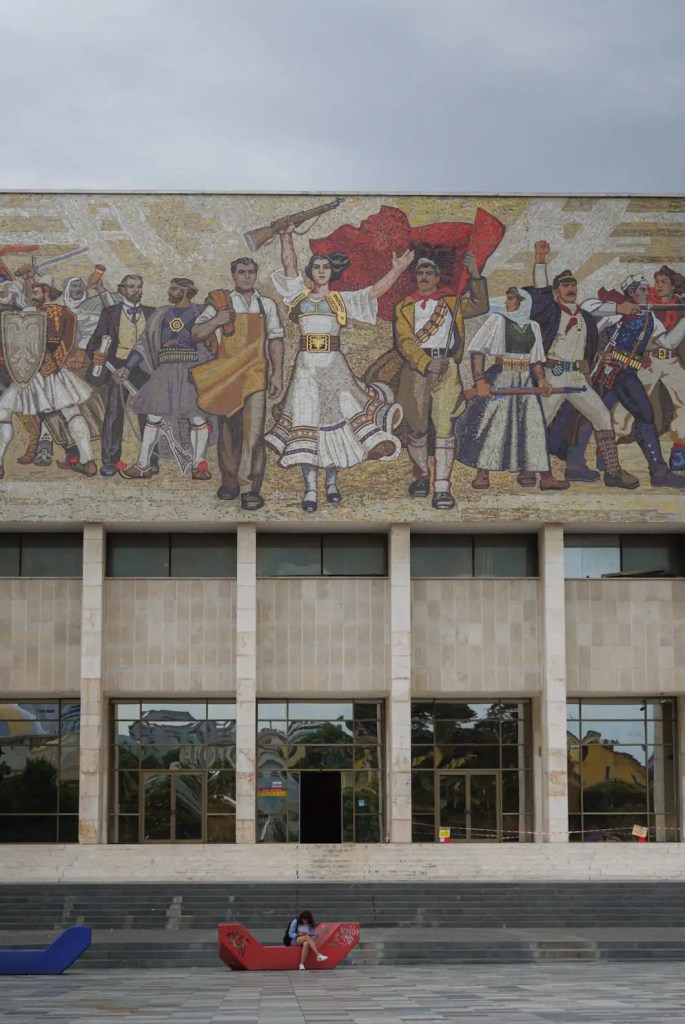

How to get there:
Connecting any destination with Tirana is the easiest and most predictable part of the journey. You can even book your tickets in advance via 12GoAsia. The trip from Berat takes around 2.5 hours and drops you right by the Tirana International Hotel, in the absolute heart of the city.
Where to stay:
I genuinely think that base camp in the Blloku neighbourhood will make you fall in love with Tirana just a little bit more. Vanilla Sky Hostel is absolutely brilliant. If you are looking for something a bit less social and more independent, check out these modern apartments in Central Blloku. Personally, I chose Tufina Hostel—to be honest, it is nothing to write home about, but it is incredibly cheap.
Shkodër / Theth: The Gateway to the Albanian Alps (2 Nights)
Shkodër is a lovely city in its own right, but it also holds the ultimate strategic location for exploring the dramatic Albanian Alps and the breathtaking Theth Valley. One of the best mountain treks in Europe, and the primary reason we allocate at least 2 days here, is the iconic Theth to Valbona Hike, considered by many to be the absolute crown jewel of Albania.
How to get there:
There are plenty of buses running this route, offering several timetables to choose from. The journey takes roughly 2 hours and costs around 12EUR. You can also secure your seats in advance via 12GoAsia.
Where to stay:
Shkodër: Places like Hostel 90pods or Hotel Kaduku will gladly store your heavy luggage so you can embark on the mountain trek much lighter.
Theth: Have you seen the stunning mountain views from Guest House Rrashkadoli? There is honestly nothing else to add.
After Shkodër, I continued my journey through Montenegro, Croatia, Bosnia I Herzegovina, Serbia, North Macedonia, and Bulgaria. The entire trip took me almost 2 months, and in Croatia, I only stopped in Dubrovnik. You can check out the “Destinations” section of the blog to explore all the little corners of the world I visit, and for a more up-to-date, day-to-day look… come and follow me on Instagram!
Frequently Asked Questions | Travelling Albania Without a Car
How do you travel by public transport in Albania?
The transport network is essentially split into two; larger buses for longer city to city journeys, and furgons (local minibuses) for shorter distances or winding mountain roads. The large buses have designated stops and established timetables. However, everything here is delightfully old school; timetables are usually found printed on posters stuck directly at the bus stops.
In certain hubs like Sarandë, you will find a small ticket office to buy your passage; in other places, local shopkeepers will be more than happy to help point you in the right direction.
The big game-changer: You can now check updated frequencies, routes, and timetables online via the Gjirafa Travel website.
How much does it cost to travel Albania by bus?
Getting around by public transport is cheap, significantly cheaper than renting a car. To give you a clear idea, for this entire 10 day itinerary from destination to destination, you will spend a grand total of between 60 to 80 EUR. Short hops between nearby villages cost around 2 or 3EUR), whilst longer journeys between major cities sit at around 10 EUR (payable in local currency, the Lek). Despite its booming popularity, Albania remains one of those European destinations where your Euros stretch a bit further.
Can I pay for the bus with a credit card or in Euros?
With the exception of online bookings, cash is king and everything is handled in Lek (ALL), the local currency. Whilst a rare driver might accept Euros, they will give you a terrible exchange rate that won’t benefit you at all. My advice is to find an ATM as soon as you step into the country and always keep small notes and coins handy.
Is it safe to travel by public transport in Albania?
I travelled solo through Albania even back when the country wasn’t as tourist-heavy as it is today, and my experience was absolutely spectacular. Albanian culture is deeply rooted in a code of traditional hospitality called Besa. Even if language barriers arise, drivers and fellow passengers are genuinely focused on looking after you, especially if you are a solo female traveller. Whilst the perception of safety is subjective, I never encountered a single dangerous or uncomfortable situation in the entire country.
Travelling Albania without a car is certainly not for everyone, and that is completely fine. It will demand your patience, it will disrupt your rigid schedules, and it will definitely make you walk more than expected. But in return, it will gift you a real, transparent, and completely unfiltered Albania.
See you at the next travel destination—thank you so much for reading this far!
Guadi.