Harbin is much more than its famous Ice and Snow Festival. It’s a fascinating city all year round, with a mix of Chinese and Russian influences that goes far beyond its architecture. Its food scene and cultural heritage are well worth exploring, but add giant snowmen, ice sculptures and a completely frozen river, and Harbin becomes one of the most impressive places to visit in winter.
Since Harbin is quite far from many other destinations in China, I recommend spending at least four days here to explore it properly. This 4-day Harbin itinerary combines outdoor activities with opportunities to warm up, relax and discover a different side of the city. I’ll also share practical tips on what to pack, where to buy affordable winter clothing and the little details that made planning my own trip much easier. Shall we?
4-Day Harbin Itinerary (Map)
The different colours group the attractions you’ll visit each day. I’ve planned this Harbin itinerary to alternate outdoor sightseeing with indoor stops where you can warm up. Trust me, you’ll appreciate the heated cafés and indoor breaks when you realise just how cold Harbin can get!
Where to Stay in Harbin 🏩
My favourite area to stay in Harbin is around Zhongyang Dajie (Central Street). If you’re staying here, this itinerary makes much more sense because you can explore several of the main attractions on foot.
One of my favourite options is Ni Hao Hotel (good location, mid-range budget and positive reviews). However, I’ve written a complete guide to where to stay in Harbin: the best areas and hotels if you’d like to compare your options before booking.
Day 1: Arrival and Exploring Harbin’s Historic Centre
I’d start your trip by exploring Harbin’s historic centre, one of the most interesting areas for understanding the Russian, European, Jewish and Chinese influences that have shaped the city.
The best thing about spending your first day here is that you can adapt the route to your arrival time, alternate outdoor walks with cafés and explore without having to organise long journeys across the city.
Zhongyang Dajie: Harbin’s Central Street
Zhongyang Dajie is one of Harbin’s most recognisable landmarks. Stretching for approximately 1.45 km, this pedestrian street is known for its historic European-style buildings, decorations, occasional ice sculptures and lively atmosphere, which changes throughout the day.
It’s worth visiting both during the day and after dark, when the street takes on a completely different atmosphere.
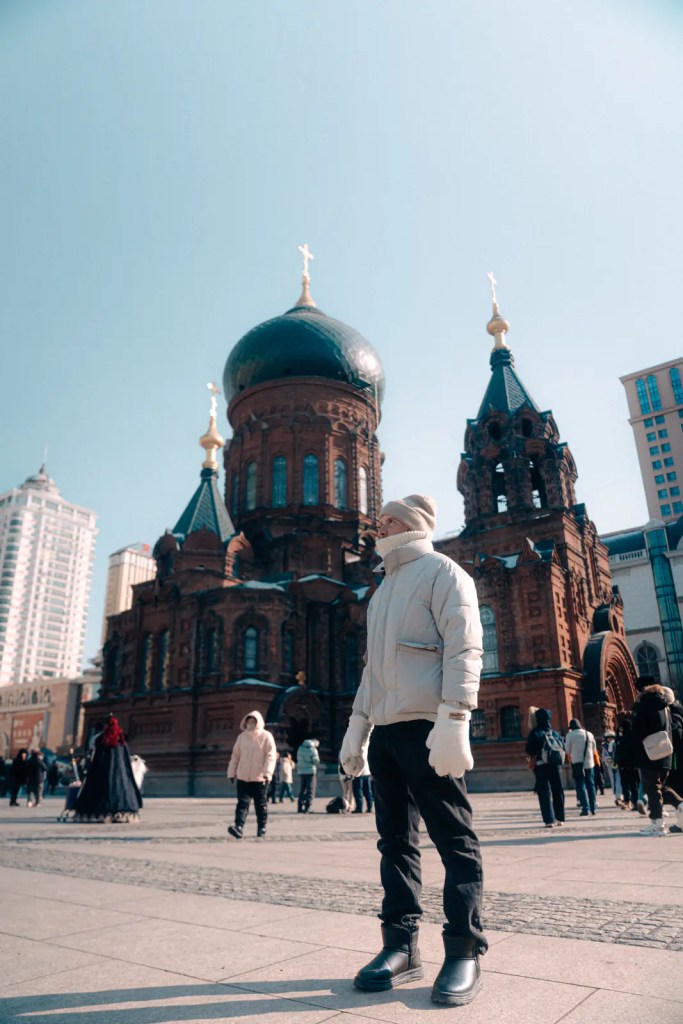
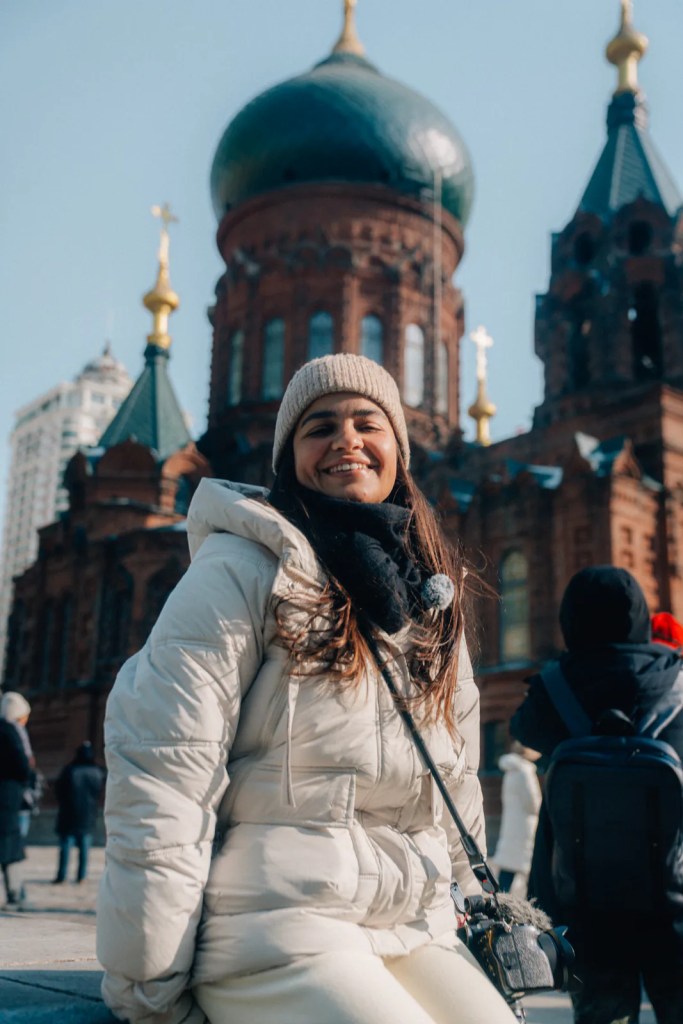
Saint Sophia Cathedral
Saint Sophia Cathedral is probably Harbin’s most recognisable building. Its Russian Orthodox architecture reflects part of the city’s history, particularly the Russian presence in the early 20th century.
You’ll probably notice lots of women braving the freezing temperatures to take photos dressed as ice princesses in traditional-style costumes. You can rent these outfits nearby. When I visited, the prices were around €60, although you should check current prices before planning your budget.
Manhattan Market and the Area Around Saint Sophia Cathedral
Here’s why I’d visit this area on your first day: you might need to buy winter clothes.
If you’re arriving in Harbin without a proper winter wardrobe, you’ll find coats, thermal layers, gloves, boots, hats and plenty of other cold-weather essentials around Manhattan Market.
Look for the shop in the basement of the building known as the Manhattan Building. It has an incredible range of affordable winter clothing.
Some items are imitations, others are Chinese brands, and the quality isn’t always the best. But if you’re missing essential winter gear, this place can genuinely save your trip.
💁🏽♀️ We travelled to China from Australia without much winter clothing. We bought all the thermal layers we needed, along with hats, gloves and even two pairs of crampons, for a total of €90.
Harbin’s Former Jewish Synagogue
Harbin wasn’t shaped only by Chinese and Russian communities. During the 20th century, the city also had a significant Jewish community.
The former Jewish synagogue opened in 1909 and, after restoration, reopened in 2014 as a concert hall. You can explore its three floors, filled with photographs and historical information, and see its famous organ.
It also operates as a café, so you can stop for a coffee while you’re there. Personally, though, I’d save my coffee break for the next place.
Goya Coffee Shop
Harbin has plenty of trendy, aesthetically pleasing cafés, but Goya Café was one of my favourites.
It’s located in an old house that served as an art studio for years. The location is convenient for exploring the city centre, and the menu features some delicious signature drinks.
It’s a lovely place to take a break from the cold before continuing your Harbin sightseeing route.
Zhaolin Park and Its Ice Sculptures
To finish your first day, head towards Zhaolin Park, at the end of Central Street.
Besides being a pleasant green space, the park features free ice sculptures during the winter season. It’s particularly beautiful at night, when the sculptures are illuminated.
Keep in mind that the displays are seasonal, so check what’s available during your visit.
Did you know China operates under the Great Firewall? This means none of the standard apps or social platforms you use every day (like WhatsApp, Instagram, or Google) will work once you arrive. You must prepare your digital setup in advance.
📲 Get a China eSIM with a built-in VPN: Activate it before boarding your flight. Having travelled to China twice now, I can tell you that trying to improvise with local solutions on my first trip ended badly. My saver and ultimate backup was an Airalo eSIM, and I didn’t hesitate to use it again on my second trip.
🗺️ Forget about Google Maps: It simply does not work in China and lacks updated data. Apple Maps performs slightly better, but missing local business listings makes it unreliable. The definitive navigation app for getting around Beijing is Amap (Gaode Maps). Download it before your flight and play around with the interface and metro lines so you feel confident when you land.
Day 2: Local Markets and the Harbin Ice and Snow Festival
Day two is packed with some of Harbin’s main winter attractions. Since most of today’s activities are outdoors, leave room in your schedule for restaurant stops, cafés or even a nap somewhere warm.
You’ll enjoy this day much more if you don’t spend every waking hour standing in the cold.
Hongzhuan Street Morning Market
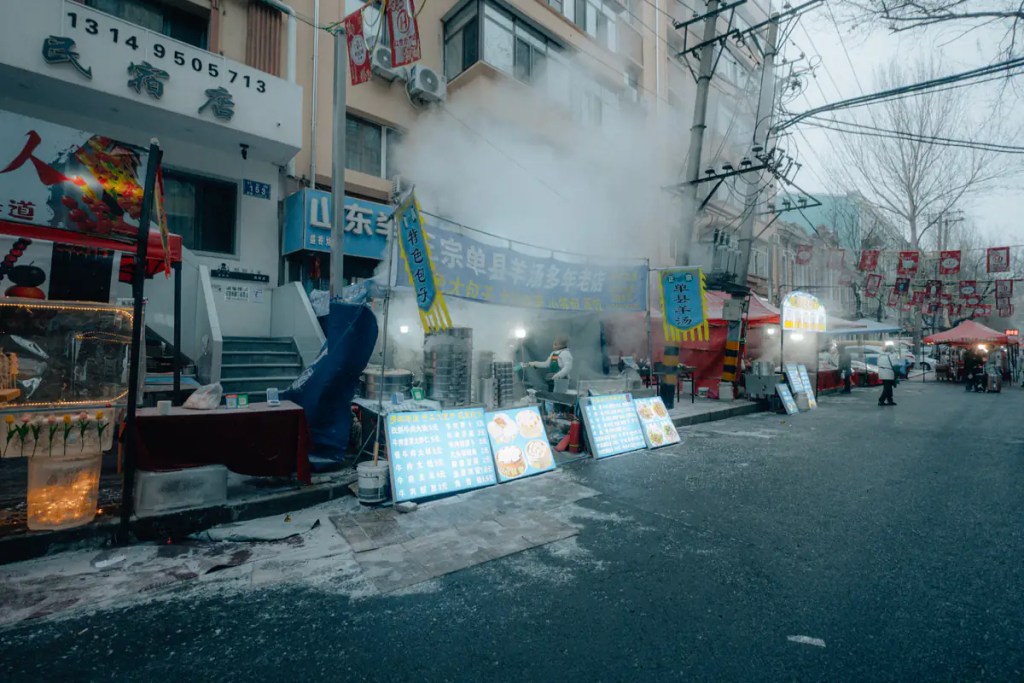
Set your alarm early! This local breakfast market opens from approximately 5 am to 9 am and is located close to Central Street.
The combination of freezing temperatures, steam rising from the food stalls and locals starting their day makes it incredibly atmospheric. And the food is delicious, too.
The point of visiting a market like this isn’t just to have breakfast. It’s also a chance to observe everyday life in Harbin, discover local dishes and step outside the usual tourist circuit.
You’ll find plenty of things to eat, although if you’re vegetarian like me, you’ll need a little extra help navigating the options. In the video, my boyfriend and I show some of the food we found and what you can look for if you don’t eat meat (watch out for the min 12.15)
Diamond Sea: Harbin’s Ice Beach
You’ve probably seen the enormous blocks of ice taken from the Songhua River every winter. They’re used to build the festival’s ice sculptures, create barriers and decorate different parts of the city.
At Diamond Sea, you can get a closer look at these blocks of ice and appreciate the sheer scale of the work involved.
This vast area beside the river offers views of the city, with enormous ice blocks in the foreground. It’s a fascinating place for photography, but be prepared for the cold and wind. Dress warmly!
🧚🏽 Diamond Sea is on the other side of the river from the city centre. Check its exact location on Amap before setting off. We found DiDi to be the most convenient way to get there.
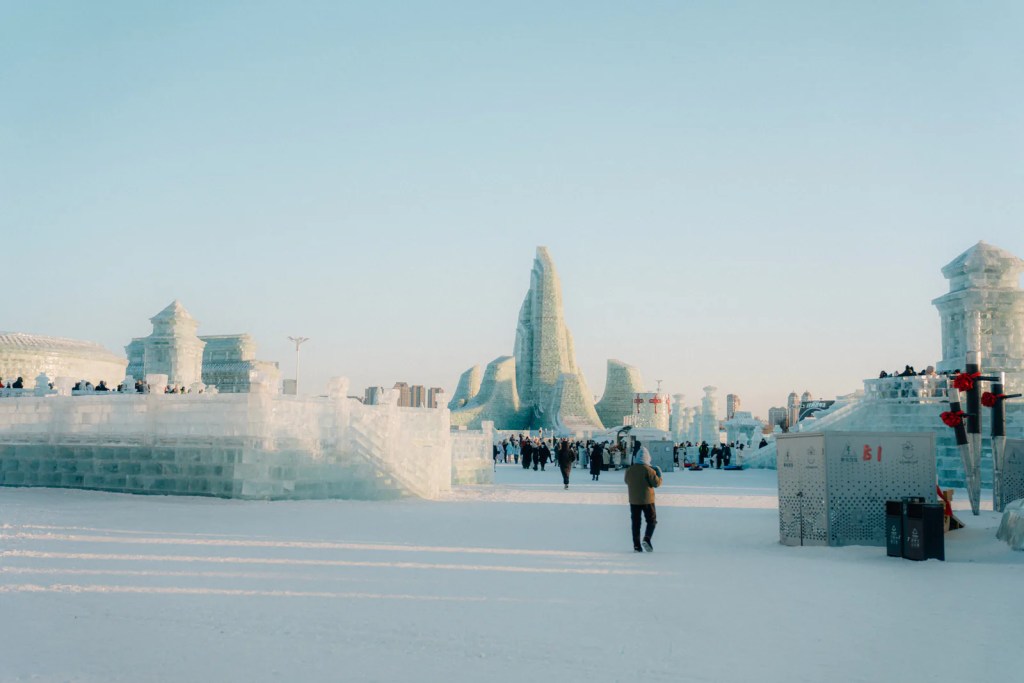

Harbin Ice and Snow World
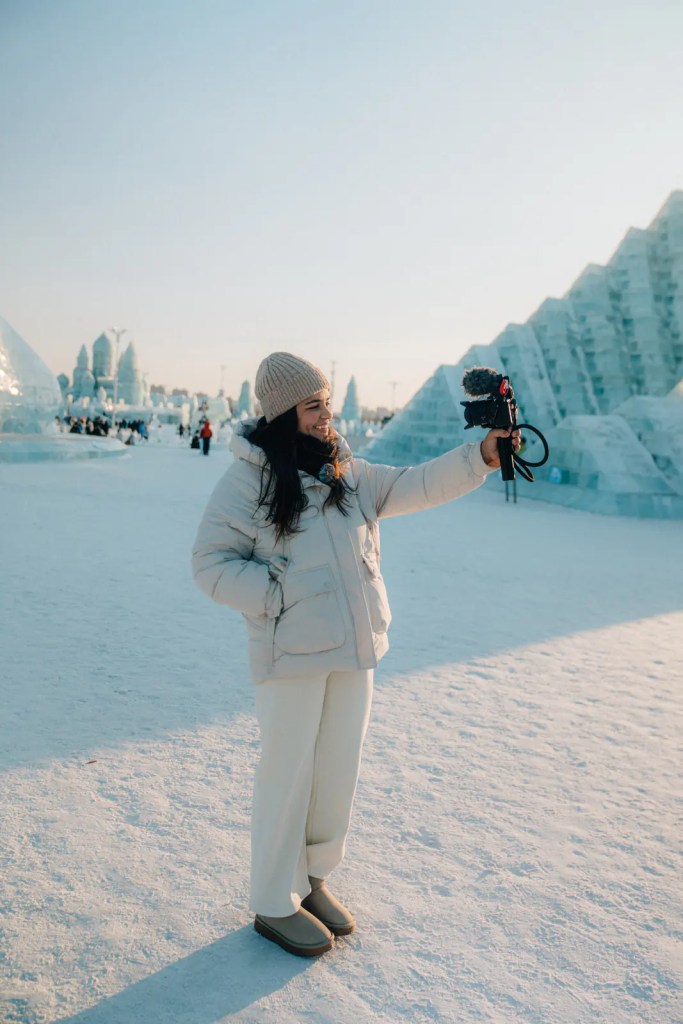
Does this one even need an introduction? Harbin Ice and Snow World is one of the main reasons people visit the city, and I genuinely think it’s worth seeing.
I’ve written a separate guide covering the experience, tickets, practical advice, what I’d do differently and how to plan your visit.
For now, here’s my most important advice: arrive one or two hours before sunset so you can experience the park in daylight and after dark, when the illuminated ice structures look completely different.
I’d also recommend taking the metro to avoid traffic jams and buying your ticket in advance. Check the available ticket options carefully so you know exactly what’s included.
Day 3: Giant Snow Sculptures, the Songhua River and Chinese History
After a full day at the festival, I’d use the third day to explore more of Harbin’s landscapes and neighbourhoods. The winter wonderland doesn’t end at Ice and Snow World!
Music Corridor and the Giant Snowman
I’d start around Music Corridor, an area known for its enormous snow sculptures, including the giant snowmen that have become some of Harbin’s most recognisable winter landmarks.
It’s also a great place for photography. Harbin has a strong musical heritage, and this part of the city offers a glimpse of that side of its identity, too.
You can take a bus from the city centre to Harbin Music Park and walk towards the Concert Hall.

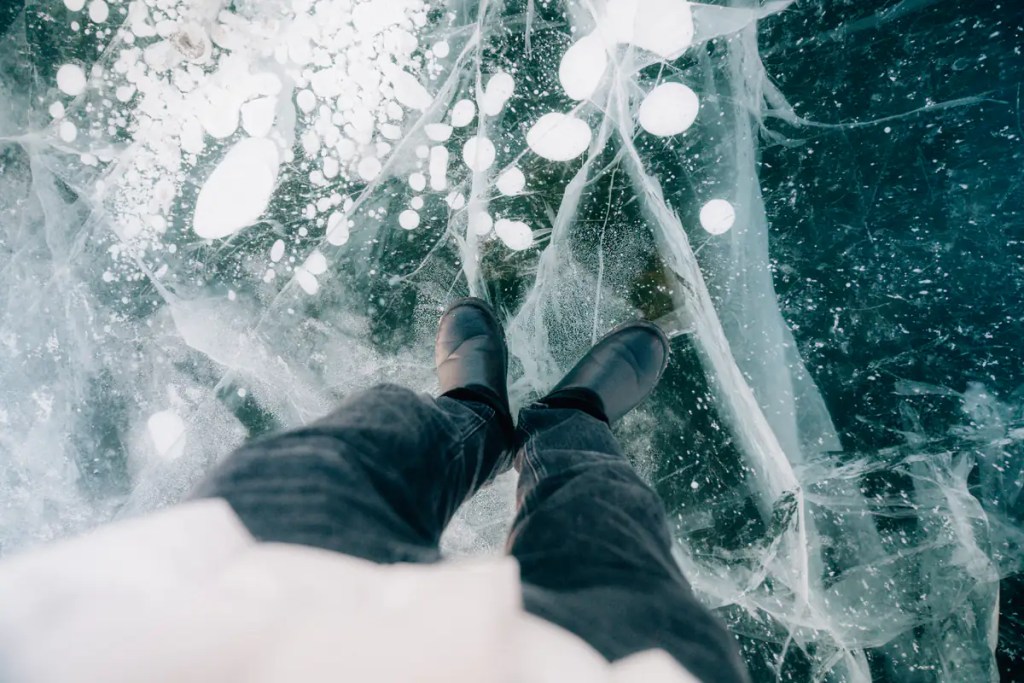

Songhua River Ice Festival
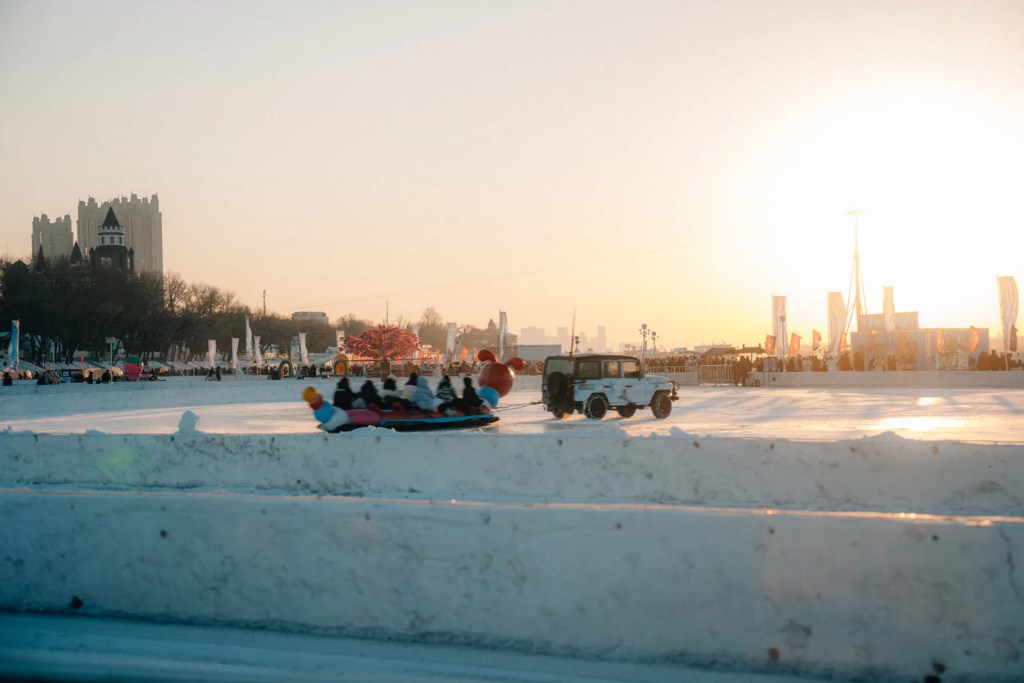
The Songhua River completely changes its appearance during winter. When conditions allow, its banks become spaces for winter activities, walks and seasonal attractions.
But this is much more entertaining than you might expect. The frozen river can feel like one enormous winter playground.
You’ll find activities such as ice slides, sledges, banana-shaped rides on the ice, food stalls and people singing. There may even be an outdoor swimming pool set up for people who want to swim in the river.
It’s a fun way to see how locals and visitors make the most of Harbin’s extreme winter conditions.
Chinese Baroque: A Different Side of Harbin
Later in the afternoon, head to the historic Chinese Baroque district.
This is one of the most interesting places to see Harbin’s cultural mix in person. The buildings have Western and Baroque-style façades, while the courtyards, interiors and everyday atmosphere reflect Chinese life and history.
Today, the area is lively, with souvenir stalls, small shops, photogenic streets and plenty of places to eat.
I’d try to avoid visiting around midday, when it can get very crowded. Going later in the afternoon, after exploring the Songhua River, makes for a much more relaxed walk.
Finish the Day at a Chinese Spa
Chinese spa complexes have become increasingly popular online, and the place I’m about to recommend is a particularly fun one.
It went viral because of a swimming pool designed to look like a giant hot pot, the famous Chinese dish featuring spicy broth and floating ingredients. Yes, it looks exactly like what you’re imagining!
But the Maple Leaf Village Hot Spring Resort offers much more than its viral pool, including some impressive outdoor pools.
⚠️ A tip from my own experience: We arrived at around 9 pm, and the resort closes at 11 pm. By the time we got there, several pools were already closing, and the food and drink options were limited.
Don’t make the same mistake I did. Go earlier in the day or evening so you have enough time to enjoy the facilities without rushing.
Day 4: A Day Trip to Volga Manor
For your fourth day in Harbin, I’d choose Volga Manor if you’d like to leave the city centre and explore a complex of Russian-inspired architecture, recreated historic buildings, gardens and landscapes that look completely different under a blanket of snow.
It’s a nice alternative to spending another full day visiting ice and snow attractions, especially if you enjoy architectural photography.
But here’s the best part; when I visited Harbin Ice and Snow World, I spent two whole hours waiting in line for my turn on the ice slide. Two hours! Volga Manor has a longer and, in my opinion, prettier slide, and it cost just €3 when I visited.
That alone made it worth considering as an alternative.
You can check Volga Manor tickets and transport options here.
Is This Guide Helping You Plan Your Trip?
If you’d like to support the blog and help me keep creating free travel guides, you can buy me a coffee!
Ice Latte for your fav blogger ☕What If You Have Five Days in Harbin?
If you have more time in northeastern China, I’d consider spending days four and five visiting China Snow Town, also known as Xuexiang.

This destination requires a little more planning than Harbin itself. I’d recommend staying overnight in the village so you can see it illuminated after dark, which is one of the main reasons people visit.
A Word of Caution About Siberian Tigers ⚠️
I wasn’t quite sure how to approach this topic or where to include it, but if you’re reading this guide to plan your trip, I think it’s also my responsibility to tell you about experiences I don’t recommend.
You’ll find plenty of articles, particularly Chinese travel guides, recommending a visit to a Siberian tiger park. It’s understandable that the idea might catch your attention, but I want to explain why I don’t think these facilities deserve your money.
Some establishments offering close encounters with captive tigers raise serious animal-welfare concerns. Supporting them for a photo or a tourist attraction can help sustain practices that put animal welfare at risk.
Tips for Planning Your Harbin Winter Itinerary
Harbin can be an incredible winter destination, but the extreme temperatures make preparation particularly important. These are the things I’d keep in mind before travelling.
Don’t underestimate the cold. A thick coat alone isn’t enough when you’re spending several hours outdoors. Dress in layers, protect your hands, feet and head, and invest in proper winter footwear. Good boots are especially important.
Alternate outdoor activities with indoor breaks. You don’t need to follow your itinerary minute by minute. Plan time to warm up between attractions instead of spending hours outside without a break. If the weather becomes particularly harsh, shorten a visit and spend longer resting somewhere heated. At Ice and Snow World, for example, you can use the heated information centres to warm up when necessary.
Check festival dates before booking your trip. The ice and snow attractions don’t necessarily operate throughout the entire winter. Each venue has its own calendar, and weather conditions can affect opening and closing dates. Historically, the main season has run from mid-December to mid-February, but you should always confirm the current dates with the official venue before booking. I visited around 14 February, and everything was still open and looking spectacular.
Protect your phone battery. Extreme cold can drain batteries much faster than usual. Bring a power bank, keep your phone protected from the cold and download maps and other important information before heading out. I’d also carry a charging cable in my backpack, just in case.
Still Planning Your Trip to China?
To finish planning your visit, I’d recommend reading my guide to where to stay in Harbin and my dedicated guide to visiting the Harbin Ice and Snow Festival.
If you’re also planning to visit Beijing and the Great Wall of China on the same trip, these guides will help you organise that part of your itinerary:
-> How to Visit the Great Wall of China | Best Sections & Tips
-> How to Visit the Great Wall of China at Night and Gubei Water Town from Beijing
-> Where to Stay in Beijing | Best Areas & Neighbourhoods for Every Travel Style
I’ve visited China twice, exploring major destinations such as Shenzhen, Shanghai, Zhangjiajie (the area famous for its Avatar-like landscapes) and Chengdu, as well as lesser-known places such as Guilin and small towns in Hunan. I’m updating all my China travel guides, and you can find them all here.
I hope you have an amazing time exploring Harbin. Wrap up warm, enjoy the city and I’ll see you somewhere else in the world!
Guadi.