

My favourite area to stay in La Paz is Sopocachi. It’s relatively safe, modern and close to the main tourist attractions. However, it isn’t necessarily the best area for everyone.
La Paz is a huge city built between mountains and steep valleys, where two places that look close on a map can involve quite a challenging walk. That’s why, before booking your accommodation, it’s worth understanding how the city is laid out, its different elevations and which neighbourhoods are generally safer than others.
In this guide, I’ll walk you through the best areas to stay in La Paz, the advantages and disadvantages of each neighbourhood, and the hotels I’d recommend for different budgets. Shall we?
⏱️ Short on time? These are my favourite hotels:
Private rooms and dormitories, with excellent communal areas.
Book from €26 →Great location, colonial-style décor and an excellent breakfast.
Book from €48 →I’d recommend spending at least 3 days in La Paz. Add another day if you’d like to do one of the day trips, such as the famous Death Road.
⚠️ All the hotels I recommend in this guide, and throughout my blog, are hand-picked. I’ve researched the neighbourhoods and compared different accommodation options, reviews, photos and prices to give you the most genuine recommendations based on my own experience in the city.
Where to Stay in La Paz? A Neighbourhood-by-Neighbourhood Guide
I’m not going to list every single neighbourhood in La Paz just for the sake of it. Instead, I’ve selected the areas I genuinely think are the best options, so you can find somewhere that suits your expectations.
Assuming you’re visiting La Paz for sightseeing and have a few days to explore the city, I wouldn’t recommend staying much further out than these neighbourhoods.
Here’s a little map to help you understand where each area is and see some useful landmarks. Keep reading for a closer look at what each neighbourhood has to offer.
Sopocachi, My Favourite Area to Stay in La Paz
I’ve already mentioned that Sopocachi is my favourite neighbourhood, but I want to go into a little more detail because I genuinely think it deserves the top spot on this list.
Sopocachi has plenty going on, with a good mix of tourism, entertainment and local life, without being right in the middle of the historic centre. It’s a lively neighbourhood during the day, with plenty of places to eat and grab a drink in the evening. It’s also becoming a favourite among younger travellers.
It’s a relatively safe area and feels more residential than the historic centre, while still being very close to it. In fact, if you’re staying in the northern part of Sopocachi, you can easily walk to many of La Paz’s main tourist attractions.
Downsides of staying in Sopocachi:
There aren’t many major tourist attractions within the neighbourhood itself, so you’ll need to travel to visit most of the sights. Accommodation prices are also slightly higher than in some other parts of the city.
💡 Just across Avenida 6 de Agosto, you’ll find the neighbourhood of San Jorge, which has a few luxury hotels. It’s very close to Sopocachi and is also considered a relatively safe area.
My favourite hotels in Sopocachi:
Martí Hotel| Best budget-friendly option
I genuinely think this is one of the best value-for-money accommodation options in the area.
It used to be a Selina hostel, so it has that familiar co-working style layout, with plenty of communal spaces where you can meet other travellers or simply spend some time outside your room.
You can choose between private rooms and dormitories, both at very attractive prices.
Check prices and availability, including free cancellation options, here.
Anami Hotel Boutique| A more stylish option
La Paz has some fantastic hotels with excellent facilities at surprisingly affordable prices, and Anami is a great example. Rooms start at around €45 for two people, including breakfast. It’s also very well located for visiting the historic centre, and the Yellow Line of the cable car is nearby.
Check available rooms, what’s included and current prices here.
Historic Centre, Best for Sightseeing
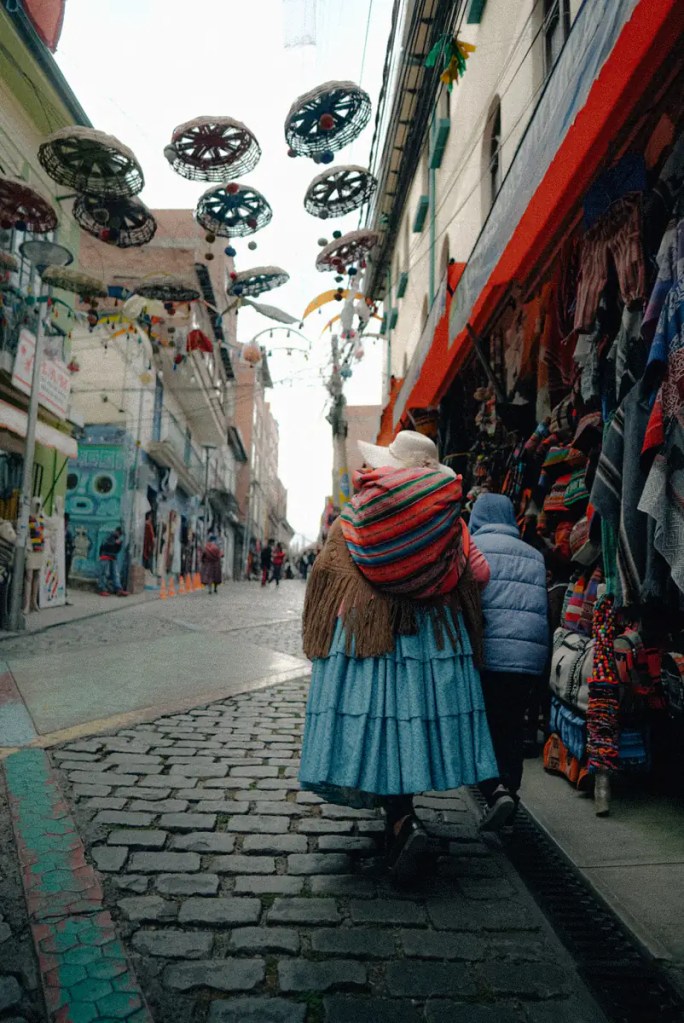


This is where you’ll find some of the city’s best-known attractions, including the Witches’ Market, Plaza San Francisco, Calle Jaén and Plaza Murillo.
The historic centre also has a good selection of hostels, budget hotels, tour agencies and restaurants.
However, the historic centre is quite large, and location really matters here. If you decide to stay in this area, I’d recommend looking for accommodation on the streets around Sagárnaga and the Witches’ Market.
💁🏽♀️ This area is ideal if you’re making a quick stop in La Paz as part of a longer trip around South America and want to have most of the main attractions within easy reach.
Downsides of staying in La Paz’s Historic Centre:
The streets can be noisy and crowded during the day, but once the shops close at night, the area can feel quite deserted and potentially unsafe. I’d recommend using Uber to get around at night and taking a few extra precautions when walking around the area.
My favourite hotels in La Paz’s Historic Centre:
Lobo Hostel La Paz | Cheap accommodation in La Paz
A great location, very affordable prices, breakfast included, and a choice of private rooms and dormitories. It also has some lovely views over the city.
Check prices and availability here.
La Casona Hotel Boutique| Excellent guest reviews
A beautiful old building with a colonial atmosphere, in a fantastic location.
It’s particularly well suited to couples and families. Based on guest reviews, it offers a higher standard of accommodation than many budget options in the area.
Double rooms start at around €75 per night.
Check available rooms and recent guest reviews here.
Calacoto and San Miguel, Home to La Paz’s Most Luxurious Hotels
La Paz’s Southern Macrodistrict (Macrodistrito Sur) stands out for its modern hotels, restaurants, shopping centres and wider streets. This area includes several different neighbourhoods, but Calacoto and San Miguel are particularly well known for their accommodation options.
The atmosphere here is quite different. Buildings are newer and taller, and the streets are filled with cafés and little design shops. It has very little in common with traditional La Paz or what you’ll find around the historic centre.
Another important thing to know is that Zona Sur sits at a considerably lower altitude than the historic centre. This can make it a good starting point if you’re looking to gradually acclimatise to the altitude.
💡 If you’re travelling to La Paz for a special occasion (a birthday, anniversary, honeymoon or something similar), this is an area worth considering! You’ll find plenty of beautiful hotels that feel a little more special.
Downsides of staying in La Paz’s Southern Macrodistrict:
It’s quite far from the main tourist attractions, and getting around can take a considerable amount of time.The atmosphere is also very different from traditional La Paz, so if you’re looking for a more authentic experience of the city, this might not be the best area for you.
My favourite hotels in Calacoto and San Miguel:
Bolivian Rooms & Suites Affordable accommodation in a premium area. This is a great budget-friendly option in a more upmarket neighbourhood. Double rooms start at around €40 per night, including breakfast, and guest reviews are fantastic.
Atix Hotel| The best luxury hotel in La Paz
This hotel is perfect if you’re looking for a little break from the altitude and the noise of Bolivia’s busy cities.
It’s a wonderful place to relax, enjoy the views and make the most of excellent facilities and first-class service.
It’s true that the price is considerably higher than what we’re usually used to paying for accommodation in Bolivia. But a hotel of this standard for around €165 per night? I’d say it’s worth considering!
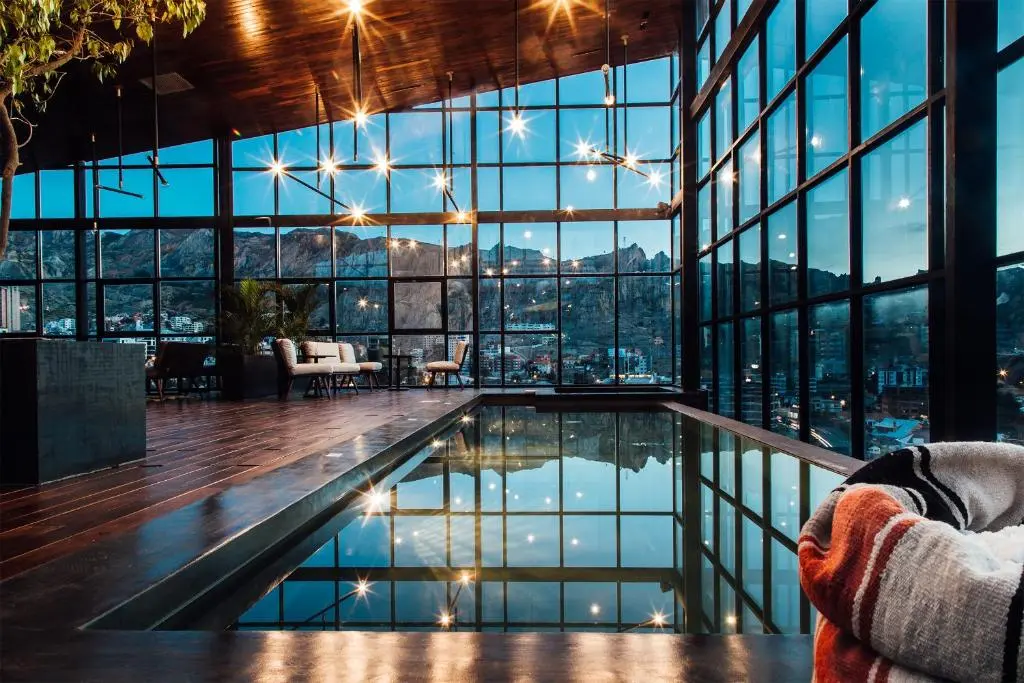

Check availability at Atix Hotel here.
Met Hotel | A special place to stay in La Paz
Met Hotel is just as beautifully designed, if not even better, than Atix Hotel. It’s located in the same San Miguel area. Think beautiful views, a swimming pool, gym and gorgeous interiors, all backed up by an impressive 9.5 rating on Booking.com.
Double rooms start at around €128 per night, including breakfast.
Book your stay here with free cancellation.
Miraflores, The Most Residential Area
Miraflores is a residential neighbourhood located east of the historic centre, around Hernando Siles Stadium and its surrounding streets.
Unlike Sopocachi and the historic centre, it’s not one of the main areas where travellers tend to stay. It has a much more local feel, with shops, restaurants, everyday services and plenty of activity from residents going about their daily lives.
It can be a good alternative if you’d prefer to get a little further away from the main tourist areas and experience what everyday life in La Paz actually looks like.
Downsides of staying in Miraflores, La Paz:
It’s not the most convenient area for visiting the main tourist attractions on foot, and there are fewer hotels to choose from compared with other neighbourhoods.
The only accommodation option I found in this area with a good balance between price and quality isHotel LP Columbus.


Things to Consider Before Choosing Where to Stay in La Paz
There are a few things about La Paz that are worth knowing before booking your accommodation. Here, location doesn’t just determine how close you’ll be to the main tourist attractions. It also affects how much walking you’ll need to do, how you’ll get around the city and how comfortable your stay will be.
Altitude, Elevation and Mountains
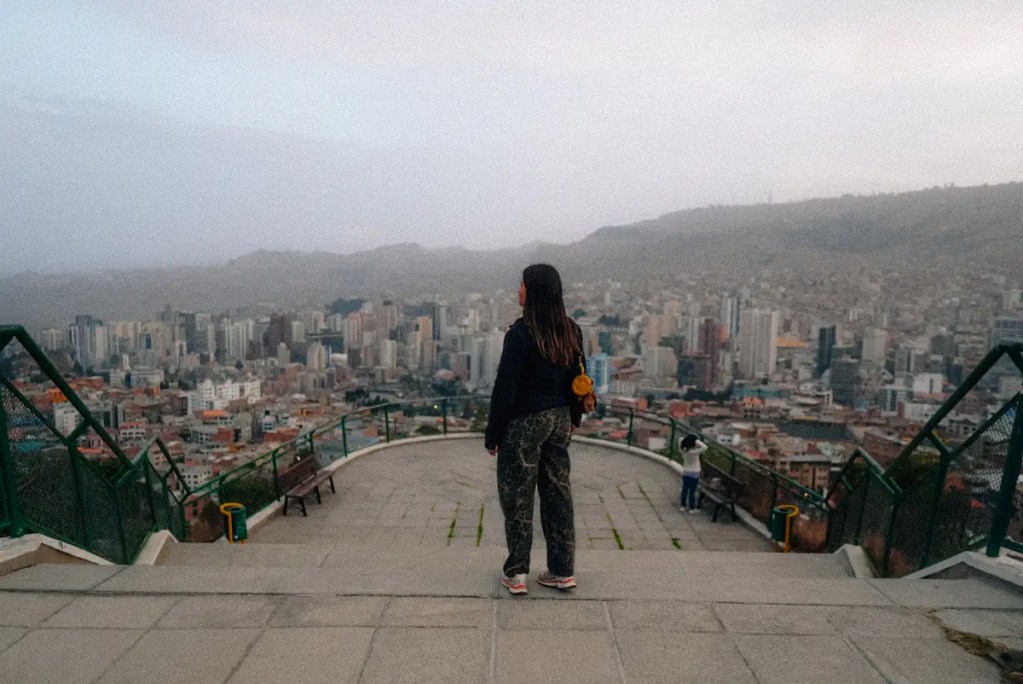
La Paz is built between mountains and steep valleys, which means that two places that look just a few blocks apart on a map can have significant elevation differences.
Always check the elevation between your accommodation and the places you plan to visit. A short distance doesn’t necessarily mean an easy walk!
Check Which Transport Options Are Nearby (The Cable Car Isn’t Your Only Option)
La Paz has an extensive cable car network connecting different parts of the city, but that’s not your only way to get around. You can also use Uber, which is very affordable, as well as the city’s bus services. I’d recommend checking Mi Teleférico to see the nearest stations and routes, and plan your journeys around the city.
Make Sure Your Accommodation Has Heating
I’m definitely a Miss Air Conditioning kind of person, but in La Paz, between the altitude and the harsh winters, you’ll want somewhere warm and cosy to come back to at the end of the day. Most tourist accommodation is prepared for the cold, but just to be on the safe side, check recent guest reviews to make sure the heating actually works!
Frequently Asked Questions | Where to Stay in La Paz, Bolivia
What is the best area to stay in La Paz, Bolivia?
Sopocachi is one of the best areas to stay in La Paz if you’re looking for restaurants, cafés and a more residential atmosphere. The historic centre is the most convenient option for visiting the main tourist attractions, while Zona Sur is a good choice if you prefer modern hotels and a quieter neighbourhood. The best area ultimately depends on your budget and how you plan to explore the city.
Is it better to stay in the Historic Centre or Sopocachi?
Personally, I feel safer staying in Sopocachi than in the historic centre. It has more restaurants open in the evening, and the streets feel busier and more comfortable to walk around. It’s also very close to the historic centre, so you don’t have to choose between convenience and a good atmosphere.
Is La Paz safe to stay in?
At first glance, La Paz can seem quite chaotic and even a little intimidating.
Its unfinished buildings, old façades and characteristic colourful rooftops give the city a rather unusual appearance, which can be a little overwhelming when you first arrive.
However, during my visit, walking around the city felt considerably more relaxed than I had expected.
As in any large city, it’s worth taking a few precautions, particularly in crowded places and after dark.
Keep an eye on your belongings in markets and busy tourist areas, avoid walking alone along deserted streets, and if you’re planning to explore less familiar neighbourhoods, check beforehand whether they’re recommended for visitors.
When choosing where to stay in La Paz, I’d recommend prioritising the tourist-friendly neighbourhoods and areas mentioned in this guide.
It’s also a good idea to read recent accommodation reviews, pay particular attention to comments about the location, and check other travellers’ experiences before booking.

Where to stay in La Paz on a budget?
Bolivia is one of the cheapest countries in the world to travel around, so you’ll probably find budget accommodation options in many parts of the city. However, the historic centre stands out for its selection of hostel dormitories, with beds starting from around €5 per night. Some even include breakfast!
How many nights should you spend in La Paz?
I’d recommend spending 3 nights in La Paz, although this depends quite a bit on where you’re heading next and how you plan to get there.
In my case, I stayed for 3 nights and spent the fourth night on an overnight bus to Copacabana. That meant I actually had 4 full days to explore the city, which I thought was the perfect amount of time to discover its different neighbourhoods, visit the main attractions and get a better understanding of this rather unusual city.
If you’re short on time, 2 full days in La Paz are enough to see the main attractions and get a good first impression. However, if you’d like to explore at a slower pace or add a day trip to your itinerary, I’d recommend staying for at least 3 nights.
You could read my article about La Paz to organize your trip better!
Still travelling around Bolivia?
My journey started in Argentina, crossing the border from La Quiaca into Villazón. From there, I continued to the Salar de Uyuni, visited the mines in Potosí, and stopped in La Paz before heading to Copacabana and eventually crossing into Peru.
You can follow my entire South American adventure directly from here. It took me 4 months to travel and many more to plan!
I’m gradually updating my destination guides and bringing each article up to date, one by one.
Thanks for making it all the way to the end!
Guadi.


