If you’re travelling through northern Argentina and want to continue your trip into Bolivia by land, you’re probably considering crossing the border via La Quiaca–Villazón.
It’s one of the most commonly used border crossings between the two countries, and you can cross either on foot or by car. And while from the outside it might seem as simple as arriving, going through immigration and continuing on your way, the experience can be quite different depending on how you cross.
I crossed this border by car and, if I’d known everything I’m about to tell you beforehand, I probably would have said goodbye to the person driving me at the border and continued on foot.
So, if you’re organising your Argentina–Bolivia border crossing, here’s everything you need to know about how the border works, what documents you need, how to cross from Argentina to Bolivia on foot or by car, which immigration and customs procedures you’ll encounter, and how to continue your journey from Villazón.
Argentina – Bolivia Borders
Which border crossing you choose will depend a lot on your itinerary.
If you’re travelling through northern Argentina and then want to continue to Potosí, Uyuni or La Paz, the La Quiaca–Villazón border crossing can fit really well into your route.
And if you’re coming from Salta or Jujuy, it’s a pretty logical option for continuing your journey into southern Bolivia.
I’m going to focus on this particular crossing because it’s the one I’ve personally used.
La Quiaca–Villazón Border Crossing
La Quiaca is in Argentina’s Jujuy province, while Villazón is in Bolivia’s Potosí Department. The two cities are connected by the International Bridge of La Quiaca, which is where the land border crossing takes place.
Argentina currently lists the opening hours for this border crossing as 7 am to midnight. Make sure to check the current hours again before your trip, just in case they change.
If you’re travelling independently, one of the things I like most about this crossing is that you don’t need to book a tour to get from one country to the other. You can arrive on your own, complete the necessary procedures and continue your journey.
Can You Walk Across the Argentina–Bolivia Border?
Yes. And if you’re travelling by public transport, this is probably the part of the article you’ll be most interested in.
Crossing the border on foot is much simpler than doing it with a vehicle because you only need to deal with your own documents and the relevant immigration controls.
The steps are:
- Get to La Quiaca.
- Head to the border crossing.
- Complete your exit procedure from Argentina.
- Cross into Bolivia.
- Complete your entry procedure into Bolivia.
- Continue to Villazón.
And that’s it.
You don’t have to deal with vehicle-related customs procedures or all the paperwork required to temporarily bring a foreign car into Bolivia.
So, if you’re planning to continue travelling by bus, I wouldn’t take a car just to cross this border.
But we’ll get into that a little further down.
What Documents Do I Need to Cross from Argentina to Bolivia?
If you’re an Argentinian, Chilean, Uruguayan or citizen of another Mercosur member country or a country with an agreement with Bolivia, you can enter using your national ID document. Keep in mind that if you’re continuing from Bolivia to another destination, travelling with your passport may be more convenient.
EU citizens, as well as British and US citizens, don’t need a visa to travel to Bolivia for tourism purposes (as of late 2026), and you only need a passport valid for at least 6 months.
💡 Make sure you get an entry stamp in your passport or a extra peper as proof of entrance, as you may be asked for it when leaving the country and even during inspections on Salar de Uyuni tours.
And if you’re travelling around South America, also check the yellow fever requirements before reaching the border, as these can depend on the countries or areas you’ve previously visited. In my case, travelling from Argentina, I wasn’t asked for it.
Crossing from La Quiaca to Villazón on Foot
The border crossing has an international bridge that is also open to pedestrians, and La Quiaca and Villazón are practically next to each other.
A very convenient option is to travel to La Quiaca by bus from Salta or Jujuy and then walk to the border from there. You can book your bus in advance here, as there aren’t many departures each day.
Once you reach the border crossing, you complete your exit from Argentina, walk across the bridge and then go through immigration to enter Bolivia. You don’t need to complete any of the vehicle customs procedures, so the whole process is much more straightforward.
The most common option, especially if you’ve just arrived in the country, is to head straight to the Villazón bus station, from where you can continue to other cities in Bolivia. A taxi to get there, as it’s a little further away, costs around 5 Bolivianos or 50 euro cents.
What Documents Do I Need to Cross from Argentina to Bolivia by Car?
If you’re crossing the Argentina–Bolivia border by car, in addition to the personal documents of everyone travelling, you’ll need the vehicle’s paperwork and customs authorisation to temporarily bring the car into Bolivia.
You’ll need:
- A document proving ownership of the vehicle.
- If the car is registered to someone else, authorisation to drive it and take it into Bolivia.
- If the vehicle is Argentine and the driver isn’t the owner, Bolivia accepts the Tarjeta Azul or an express authorisation from the owner.
- The SIVETUR Form, which is the document Customs uses to register the vehicle’s temporary entry into Bolivia. For Argentine vehicles, there is a specific form under the Bolivian–Argentine Agreement.
Keep absolutely everything you’re given. Especially the Customs/SIVETUR form, because you’ll also need it when taking the car back out of Bolivia.
How to Cross the Argentina–Bolivia Border by Car
Here’s how the crossing worked for me, so you have an idea of what to expect.
The first time you see all the different controls together, it can feel pretty overwhelming. There’s immigration, customs, vehicle paperwork, physical inspections and different procedures on both sides of the border.
4 Procedures at the La Quiaca–Villazón Border
After that, each passenger has to get out and complete procedures at 4 different booths;
💁🏽♀️ You can leave the car in a nearby paid car park on the Argentine side
ARGENTINE IMMIGRATION: This is a white trailer with blue writing on the right-hand side of the site. Here you’ll need to present your passport or national ID, along with the vehicle’s registration document.
They’ll give you a document for the car called a PASAVANTE. This is one of the most important things to keep, as you’ll be asked for it several times.
BOLIVIAN IMMIGRATION: This is the third blue trailer on the right. Here you’ll present the same documents: your ID or passport and the vehicle’s registration document. If the car isn’t in your name, you’ll need the Tarjeta Azul instead.
They’ll give you an entry certificate, which you need to keep until you leave the country. They don’t stamp your passport.
ARGENTINE CUSTOMS
This is the white building on the right, closest to the bridge. Here you present the vehicle owner’s documents and their ID.
They’ll give you two stamped forms that you need to present to Bolivian Customs.
BOLIVIAN CUSTOMS
This is the blue trailer on the left, at the same height as Argentine Customs, directly opposite it. Here you need to complete an entry declaration form, which will generate a QR code. This is the page to do it (complete it before you’re attended to so you can save some time).
Once they attend to you, you’ll need to show the QR code along with your ID documents, the vehicle registration, the Pasavante issued by Argentine Immigration and the form issued by Argentine Customs.
Once you have all the required documents, you’ll be given permission to take the car across the bridge (only one car is allowed through at a time), where it is checked first by Bolivian Customs and then by Argentine Customs.
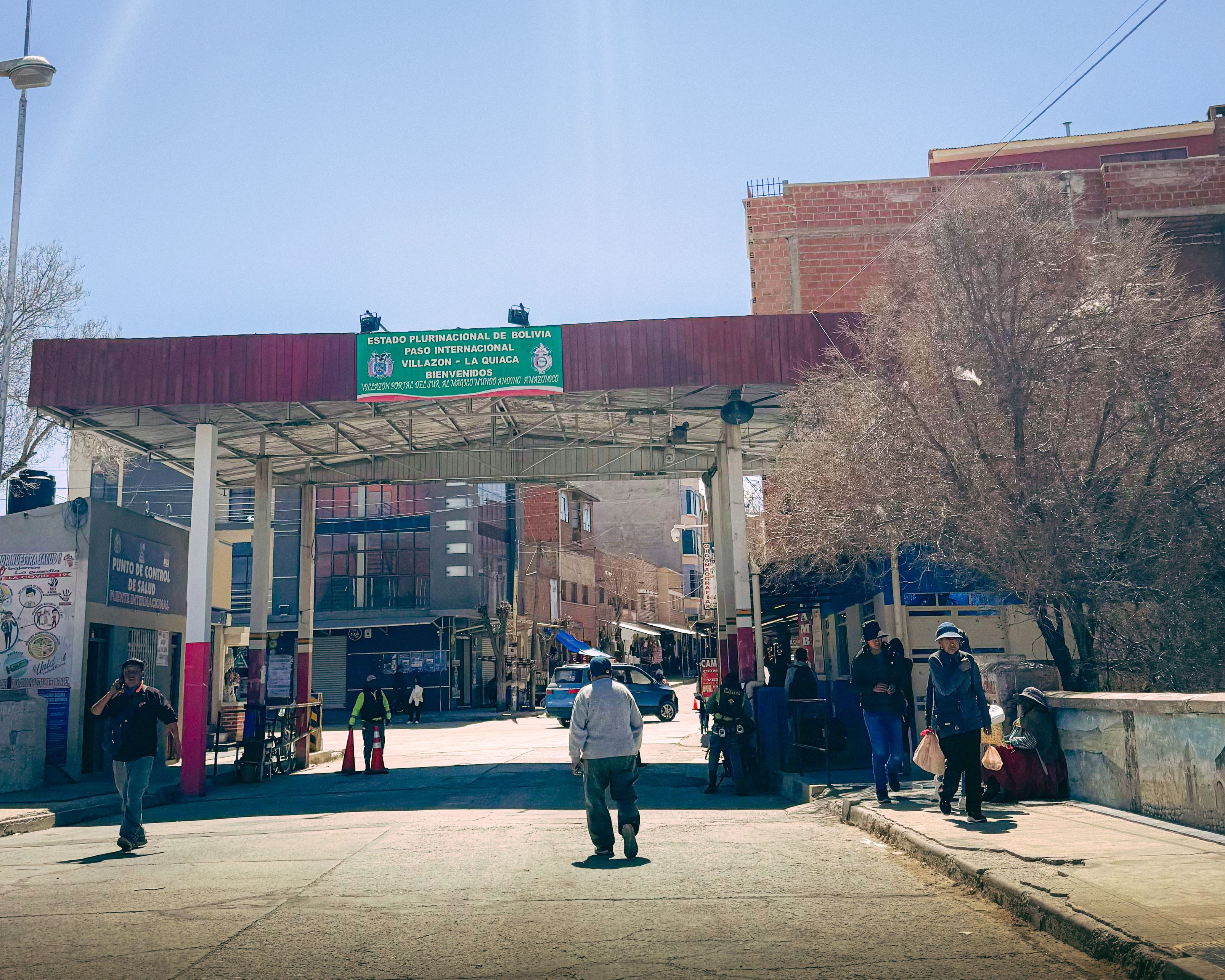
As Soon as You Arrive in Bolivia
One of the passengers has to go to a Bolivian Health booth and pay 20 Bolivianos (there’s a currency exchange place directly opposite, although it doesn’t have the best exchange rate). This amount is for the car to be “sprayed”. The road safety officer who stops you so you can go to the health booth charges another 5 Bolivianos, although I never understood why.
These last two procedures also come with payment receipts that you’ll need to present when leaving the country. So you can’t really skip them.
After all of this, you’ll have completed the procedures and can continue into Bolivia in your own car.
How Long Does It Take to Cross the Argentina–Bolivia Border?
The time depends on the number of travellers, the day, the controls and, above all, whether you’re crossing on foot or by vehicle. If you’re walking, the process is much simpler.
If you’re looking to book a bus from Villazón to other parts of Bolivia, leave yourself plenty of time for unexpected delays.
What to Book Before Crossing into Bolivia
If you’re organising the whole trip independently, these are the things I’d have sorted before reaching the border:
Internet in Bolivia
If your phone is eSIM-compatible, you can also arrive in Bolivia with internet from the moment you cross the border and avoid relying on the border’s Wi-Fi. I always use Airalo, which works really well, and you can use «GUADAL1787» for 3 EUR off.
If you’re staying for a while, I used ENTEL, a local Bolivian eSIM provider that worked perfectly for me and has good prices. The only catch is that you have to go to one of their official shops to activate it.
Cash in Bolivianos
For your first expenses after crossing the border, such as taxis, transport, food and small shops, it’s important to have some cash. Although cards are becoming more widely accepted, prices are often a little lower when paying in cash.
Bolivia is one of those places where exchanging cash or foreign currency can be better than withdrawing money from an ATM, as the exchange rate is often more favourable.
Transport in Bolivia
If you already know that you’ll be heading towards Potosí, Uyuni or La Paz after crossing the border, you can check bus schedules and prices in advance. 12Go Asia seemed to me like the most comprehensive comparison site. Try to choose overnight departures when possible; buses in South America are usually quite comfortable, and you can save yourself a day of travelling.
Where to Stay Once You’re in Bolivia?
🏩 Villazón: Hostal Casa Grande
🏩 Uyuni: Hostal La Magia de Uyuni
🏩 Potosí: Colonial Hotel Boutique
And Now… Time to Discover Bolivia!
Crossing from Argentina to Bolivia can seem much more complicated than it actually is, especially if it’s your first land border crossing. If you’re travelling on foot, the process is fairly straightforward; if you’re crossing by car, you just need to know beforehand that you’ll go through several immigration and customs checks and paperwork.
My advice is to arrive at the border with your documents organised, some cash in Bolivianos and, most importantly, without being in a rush. Knowing which procedure comes next makes the whole experience much easier.
Once you leave La Quiaca behind and cross into Villazón, another part of the journey begins. From here, you can continue to Potosí, Uyuni or La Paz, depending on the route you’re taking through Bolivia.
And if you’re still planning your itinerary, here are some of my guides to help you keep travelling around the country:
-> Complete Guide | How to Visit the Salar de Uyuni Independently
-> Visiting Potosí and the Mines (Complete Guide)
verything You Can Do in La Paz, Bolivia
>If you’re still planning your trip around Argentina, this section may help you.
Bolivia was the first country on my South America route after Argentina, so I have a very special connection with it. And, honestly, it ended up changing my trip quite a bit.
After crossing the border into Villazón, I took a tour of the Salar de Uyuni, travelled solo through Potosí and made it all the way to La Paz, where I met the person who is now my partner. I also fell off the Death Road (and yes, it was bad) and fell completely in love with Isla del Sol.
From Bolivia, I continued travelling through Peru, Colombia, Guatemala and Mexico, but many of the stories I remember most from that trip started here. I hope this country surprises you as much as it surprised me.
And if this article arrived at exactly the right moment and helped you organise your trip, you can support this blog by buying me a coffee ☕. It’s one of the loveliest ways to help me keep travelling and creating free guides like this one.
Until the next destination.
Guadi.